THeofrastos
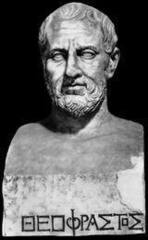
Theophrastus (372 - 287 BC). Born in Eresos, Theophrastus is one of the most prominent figures from ancient Lesbos. He was the foremost student, collaborator, and successor of Aristotle, whom he succeeded as the head of the "Peripatetic School," holding the position with distinction for 34 years and attracting around 2,000 students from all over Greece.
Theophrastus excelled in all branches of wisdom, including Metaphysics, Logic, Ethics, and Rhetoric, but he primarily served the natural sciences. His literary work was vast. Of the 240 treatises attributed to him, apart from his botanical works and the collection of "Characters," only fragments have survived. However, these are sufficient to provide a clear picture of his personality.
In his two botanical works, "Enquiry into Plants" and "On the Causes of Plants," Theophrastus attempted a systematic and detailed classification of the plant world. These works are of exceptional importance as they contributed to the establishment of the corresponding scientific fields and the systematization of empirical research for the first time in its entirety. They also testify to the wise researcher and thinker Theophrastus, who explored the valleys and mountains of Eresos.
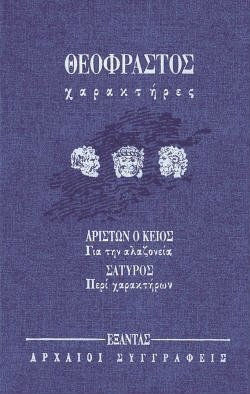
Another aspect of Theophrastus is presented in the "Characters." This collection consists of thirty sketches, which provide an excellent depiction of various human characters. This is due to Theophrastus's ability to discern the manifestation of psychological states in detail, making the "Characters" small masterpieces, unparalleled in their genre.
This genre was also transferred to the theater. Thus, Theophrastus inaugurated the great series of the famous "Characters," which theatrical creation has continued to produce from antiquity to the present day.

 Classical Literature Books