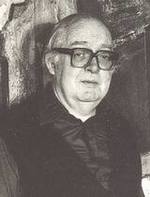
Friedrich Dürrenmatt
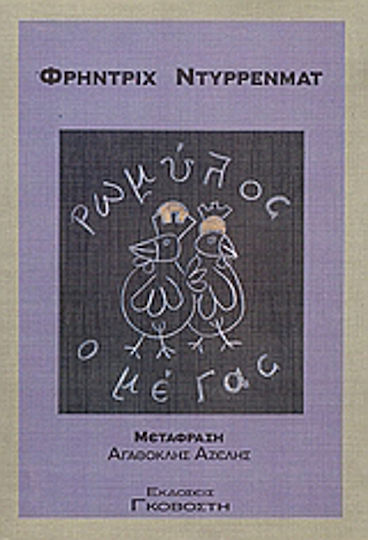
Friedrich Dürrenmatt (1921-1990) was born in Konolfingen, a village near Bern, Switzerland. The son of a Protestant pastor, he studied philosophy and theology in Bern and Zurich. Initially, he worked as a graphic artist and designer while simultaneously writing his first plays and short stories. In 1947, he made his first major appearance as a playwright with his work "Es steht geschrieben" ("It Is Written"), which caused a theatrical scandal in Zurich. This was followed by "The Blind Man," "Romulus the Great," "The Marriage of Mr. Mississippi," and "An Angel Comes to Babylon." His major successes came with the two plays that made him known worldwide and were performed in Athens by the National Theatre: "The Visit" and "The Physicists." The last of a long series of plays was "Der Meteor" (1967), which was performed simultaneously in many cities across Europe and was highly successful. All these achievements made Dürrenmatt one of Europe's greatest and most renowned writers. He was considered the "enfant terrible" of Swiss literary life, a restless, biting, ironic, and critical spirit that surprised and startled audiences with each new work. During his lifetime, he was honored with numerous awards, including the Critics' Circle Theatre Award and the Schiller Prize. He passed away in 1990.
(Photo: Isolde Ohlbaum)







Be the first to leave a comment!