

Kaufleitfaden für Sicherheitsschuhe
Suchst du das ideale Paar Schuhe für die Arbeit? Bist du verwirrt über Schutzebenen und zusätzliche Zertifizierungen und brauchst eine Orientierungshilfe? Lassen Sie uns im Detail ansehen, worauf Sie achten müssen und was die Arbeitsschuhe haben sollten, die du basierend auf deinen Bedürfnissen kaufen möchtest.
Ein paar Worte...
Ein richtiges Paar Arbeitsschuhe kann Sie vor Verletzungen schützen, Ihnen Komfort bieten und die Effizienz unterstützen, je nach der Arbeit, die Sie ausführen. Diese Schuhe zeichnen sich durch Schutzniveaus aus, basierend auf einigen grundlegenden Anforderungen, die in verschiedenen Arbeitsumgebungen auftreten, und Zertifizierungen werden auf diese Niveaus angewendet, um sie für verschiedene Arten von Arbeiten geeignet zu machen.
In der folgenden Tabelle finden Sie eine Zusammenfassung der Schutzniveaus sowie das, was jedes bietet:
SkroutzTip: Wenn du Sicherheitsarbeitsschuhe suchst, die die grundlegenden Anforderungen erfüllen, suche nach Schuhen, die definitiv eine schützende Zehenschutzkappe haben, die stoßfest ist (SB).
Kennen Sie den Nutzen? Wir wissen, was Sie brauchen!
Lassen Sie uns also je nach Bedarf oder Beruf, den Sie haben, sehen, welche die idealen Schuhe für Sie sind und welche Eigenschaften sie haben müssen!
Grundschutz & Stehschutz | Komfort
Wenn du Schuhe mit Grundschutz suchst, ideal für Stehschutz, musst du nach leichten und bequemen Schuhen suchen. Solche Schuhe bieten den minimalen Schutz, haben keinen Zehenschutz und sind geeignet für leichte, längere Arbeit in Umgebungen, in denen kein hohes Risiko besteht.
Geeignet für Angestellte im Einzelhandel, Mitarbeiter im Gesundheitswesen, Sicherheitsdienste oder Wartungsarbeiter bei mittelschweren Tätigkeiten.


Benötigen Sie mehr Schutz, Komfort und zusätzliche Unterstützung für Ihre Füße;
- Schuhe mit Fersenenergieabsorption (E) helfen, die Ermüdung des Sprunggelenks zu reduzieren, die durch langes Stehen bei Arbeiten verursacht werden kann. Ideal für Personen, die im Service oder in Kundenservicegeschäften arbeiten, wo Stehen erforderlich ist.
- Schuhe mit Sprunggelenkschutz (AN) verfügen über Verstärkungen um den Bereich des Sprunggelenks und verhindern Verletzungen, die durch Kontakt mit harten oder scharfen Oberflächen entstehen können. Ideal für Personen, die auf Baustellen oder im Baugewerbe arbeiten.
- Schuhe mit Mittelfußschutz (M) sind verstärkt im oberen Bereich, um Verletzungen durch scharfe oder große Gegenstände zu verhindern. Ideal für Arbeiten, die Bau- und Industrieprojekte erfordern, bei denen die Gefahr besteht, dass solche Gegenstände fallen.
Technische Arbeiten & Lager | Rutschfeste Schutzmaßnahmen
Wenn du wieder in einer Lagerhalle arbeitest oder auf der Suche bist nach rutschfesten Schuhen, die ideal für technische Arbeiten sind solltest du darauf achten, dass sie Zehenschutz haben und antistatische Eigenschaften aufweisen, Energieabsorption in der Ferse bieten sowie resistent gegen Kraftstoffe und Öle sind. Außerdem machen sie durchstechende Widerstandsfähigkeit gegen scharfe Gegenstände sowie Schutz vor Rutschgefahr auf allen Arten harter Böden, sowohl auf nassen glatten als auch auf harten fettigen Oberflächen, sie zu etwas Besonderem.
Geeignet für Arbeitnehmer in Bau- und Industriearbeiten, Handwerker in Werkstätten und Lagerarbeiter.
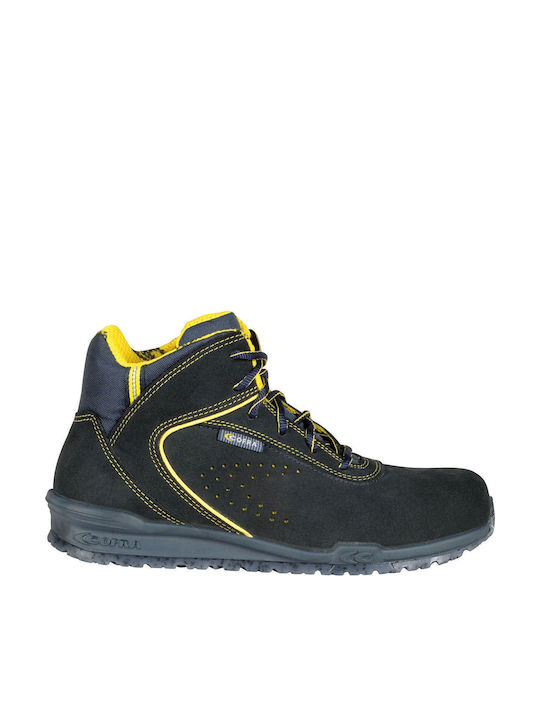


Benötigen Sie Schuhe die resistent gegen rutschige Oberflächen sind?
Schuhe mit Rutschfestigkeit (SR) verfügen über eine Sohle, die aus speziellen Materialien hergestellt ist, bieten besseren Halt und halten den Fuß auf verschiedenen Oberflächen stabil. Genauer gesagt:
- Schuhe mit Rutschfestigkeit auf nassen Böden (SRA) sind geeignet für Arbeitsbereiche mit nassen, glatten Böden, wie Fliesen. Ideal für Personen, die in Küchen, Krankenhäusern oder Lebensmittelindustrien arbeiten, wo Flüssigkeiten auf dem Boden verschüttet werden können.
- Schuhe mit Rutschfestigkeit auf fettigen Böden (SRB) sind geeignet für Arbeitsbereiche mit fettigen, harten Böden, wie Lack- oder Harzbeschichtungen. Ideal für Personen, die in Industrien oder mechanischen Umgebungen arbeiten, wie Werkstätten, wo Öl und Kraftstoffe auf dem Boden vorhanden sein können.
- Schuhe mit kombinierter Rutschfestigkeit (SRC) kombinieren die beiden oben genannten Zertifizierungen. Sie bieten den höchsten Schutz gegen Rutschen.
Elektrische Arbeiten | Antistatischer Schutz
Die Schuhe für elektrische Arbeiten bieten Zehenschutz, sorgen für zusätzlichen Schutz vor Wasser und anderen flüssigen Substanzen und sind mit erhöhter Durchstoßfestigkeit ausgestattet. Sie sind rutschfest und antistatisch, was ihnen ermöglicht, die gefährliche Ansammlung von elektrostatischer Ladung zu verhindern.
Geeignet für Elektriker, Ingenieure und Handwerker in gefährlichen Umgebungen mit Elektrizität.


Benötigen Sie Schuhe, die für Schutz vor elektrostatischen Entladungen und Elektrizität bestimmt sind?
- Antistatische Schuhe (ESD) schützen vor der Ansammlung von elektrostatischen Ladungen und helfen dabei, diese sicher auf den Boden abzuleiten. Ideal für Personen, die in Industrien mit empfindlicher Elektronik oder in Branchen mit Brennstoffen, Chemikalien und anderen leicht entflammbaren Materialien arbeiten.
- Antistatische Schuhe (A) bieten hauptsächlich Schutz vor statischer Elektrizität und verhindern die Ansammlung elektrostatischer Ladungen am Körper. Ideal für Elektriker und Arbeitnehmer in Fabriken und Bereichen mit mittlerem Risiko der Ladungsansammlung.
Die antistatischen Schuhe A haben eine höhere Widerstandsfähigkeit im Vergleich zu den ESD-Schuhen und bieten auch einen gewissen Schutz vor Stromschlägen bei niedrigen Spannungen.
- Leitende Schuhe (C) haben einen sehr niedrigen Widerstand und ermöglichen eine schnelle Ableitung elektrostatischer Ladungen. Ideal für Personen, die in Bereichen mit explosiven oder leicht entflammbaren Materialien arbeiten
Leitende Schuhe schützen nicht vor Stromschlägen.
Hydraulikarbeiten | Wasserbeständigkeit
Auf der anderen Seite kannst du Arbeitsschuhe für hydraulische Arbeiten finden, die Zehenprotektoren haben, zusätzlichen Schutz vor Wasser und anderen Flüssigkeiten bieten und so gestaltet sind, dass sie das Eindringen von Wasser in den Schuh verhindern und die Füße in feuchten Arbeitsumgebungen trocken halten. Außerdem verfügen sie über eine verstärkte Durchstichfestigkeit, eine rutschfeste Sohle und bieten Schutz vor Ausrutschen auf allen Arten harter Böden.
Empfohlen für Klempner, Bauarbeiter auf Baustellen und alle Arbeiten in feuchten Umgebungen.


Benötigen Sie Schuhe mit Wasserdichtigkeit und Wasserbeständigkeit?
Schuhe mit Wasserdichtigkeit (WR) sind so konzipiert, dass sie verhindern, dass Wasser in das Innere des Schuhs eindringt, und halten die Füße trocken. Ideal für landwirtschaftliche Arbeiten, Baustellen und Bauarbeiten während der Wintermonate oder jede andere Arbeit, die häufig mit Wasser in Kontakt steht.
- Genauer gesagt, gibt es Schuhe mit Wasserbeständigkeit im oberen Bereich (WRU), die eine spezielle Beschichtung an der Stelle aufweisen, an der Wasser eher eindringen könnte. Ideal für Arbeitnehmer in Werkstätten, Lagern oder in feuchten Umgebungen.
Oberbau- & landwirtschaftliche Arbeiten im Außenbereich | Hitzebeständigkeit
Zum Schluss, wenn du Schuhe für Bau- und Landarbeitsarbeiten im Außenbereich brauchst, stelle sicher, dass sie eine Sohle haben, die thermische Isolierung bietet und die Füße vor Kälte schützt. Solche Schuhe sollten auch Zehenprotektoren, zusätzlichen Schutz vor Wasser und anderen Flüssigkeiten, verstärkte Durchstichfestigkeit, rutschfeste Sohle und Schutz vor Ausrutschen auf allen Arten von harten Böden besitzen.
Geeignet für schwere Bauarbeiten auf Baustellen und landwirtschaftliche Arbeiten im Außenbereich.


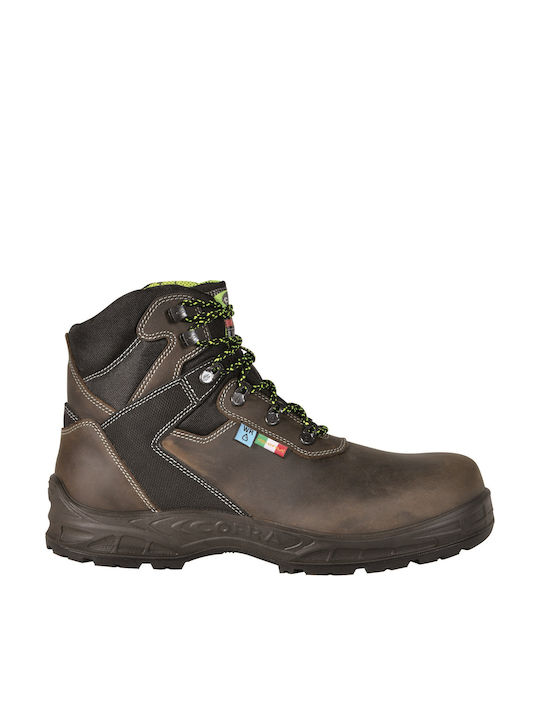


Du brauchst Schuhe zum Schutz vor extremen Wetterbedingungen, aber auch vor den Temperaturbedingungen am jeweiligen Arbeitsplatz;
- Schuhe mit isolierter Kältesohle (CI), die thermische Isolierung bieten und die Füße vor Kälte schützen. Ideal für Lieferanten, Transportarbeiter und alle, die bei niedrigen Temperaturen arbeiten/unterwegs sind.
- Schuhe mit hoher Hitzebeständigkeit (HI) werden aus verstärktem Material hergestellt, um die Wärmeübertragung ins Innere des Schuhs zu verhindern. Ideal für Arbeit in Umgebungen mit hohen Temperaturen, wie Eisenwerke, Öfen oder Außenarbeiten in den Sommermonaten.
- Schuhe mit hochtemperaturbeständiger Sohle (HRO) verfügen über eine spezielle Sohle aus Materialien, die Temperaturen bis zu 300°C für bis zu 60 Sekunden standhalten. Ideal für Arbeit in Fabriken, Metallindustrien oder überall dort, wo Gefahr durch heiße Materialien besteht.

Welches Material sollten Sie wählen?
Das Material eines Schuhs spielt eine bedeutende Rolle für die Lebensdauer, Haltbarkeit und Qualität des Schuhs - besonders wenn wir über Arbeitsschuhe sprechen. Sie können Schuhe aus folgenden Materialien finden:
- Leder: Lederschuhe sind in der Regel schwerer, eignen sich für den Einsatz im Winter oder in Arbeitsumgebungen mit niedrigen Temperaturen und gelten als langlebiger. Sie können sie verwenden, wenn Sie auf einer Baustelle, im Bauwesen, als Ingenieur oder sogar als Lieferant mit dem Motorrad in den Wintermonaten arbeiten.
- Synthetisches Material: Dieses Material macht die Schuhe leichter und bequemer. Schuhe aus synthetischem Material werden für Berufe empfohlen, bei denen Komfort entscheidend ist, wie zum Beispiel für Arbeiter in der Gastronomie, im Einzelhandel oder im Gesundheitswesen.
- Wasserdichtes Material: Wasserdichte Schuhe sind eine eigene Kategorie, da sie in bestimmten Berufen erforderlich sind, in denen das Vorhandensein von Wasser eine große Rolle spielt. Zum Beispiel in der Landwirtschaft, in mechanischen Umgebungen wie Autowerkstätten oder auf Schiffen.
Extras
Wenn du mehr Komfort brauchst, kannst du nach Schuhen suchen, die eines der folgenden Merkmale aufweisen:
- Fußstütze, um Verletzungen zu vermeiden. Du kannst Arbeitsschuhe ausprobieren, die den Fuß besser stützen.
- Stoßdämpfung, für eine bequemere Arbeit. Sportschuhe für die Arbeit können helfen, den Alltag bei der Arbeit angenehmer zu gestalten.
- Innenfutter, um Blasen und Reizungen zu vermeiden, und Weichheit, mit Schuhen, die den Fuß umhüllen, ohne ihn zu drücken. Bevorzuge Arbeitsschuhe ohne Stahl für mehr Komfort.
- Atmungsaktivität/Dämmung, um die Temperatur im Inneren des Schuhs je nach Jahreszeit/Witterung zu regulieren. Wähle Wasserdichte Arbeitsschuhe für den Winter und durchlässige für den Sommer.
Vergessen Sie nicht! Oft kann es Unterschiede bei einem Produkt geben, basierend auf seinen allgemeinen Eigenschaften und seiner Konstruktion. Bevor Sie sich entscheiden, lesen Sie die Bewertungen anderer Benutzer, um auch deren Meinung zu sehen!
Du kannst auch einen Blick werfen auf den Leitfaden mit den besten Arbeitsschuhen für jeden Bedarf, in dem du die besten Optionen basierend auf dem Feedback der Nutzer findest, egal unter welchen Bedingungen dein Arbeitsumfeld ist.
Relevante Artikel

Die besten Arbeitsschuhe für jeden Bedarf
Die besten Bohrschrauber & Elektroschrauber auf dem Markt
Die besten elektrischen Schraubenzieher auf dem Markt
Sei der Erste, der einen Kommentar hinterlässt!