

Electric Hot Water Bottle: How to Choose the Right One for You
Neck, back, or leg massagers, corded or rechargeable: everything you need to know before choosing.
An electric heating pad is the modern version of the classic hot-water bottle: it heats up in just a few minutes, maintains a steady temperature for as long as you need it, and lets you adjust how warm it gets. It’s ideal for warming your neck, lower back or feet on cold evenings, or for relaxing after a long day.
There are plenty of options, though: cape, belt or boot styles, corded or rechargeable models, and products with just a few or many settings. That’s why we’ve put together everything you need to know to help you choose the electric heating pad that’s right for you. Let’s take a closer look!
1. Where will you use it?
The first thing to decide is where you want to feel the warmth. The shape of the heating pad plays a big role: the better it fits around the area, the more evenly it transfers heat.
- General-purpose heating pads: These are flat, usually 30x40 or 40x50 cm, and you can place them wherever you like: on your stomach, back or knees. They’re the most versatile option if you want one heating pad for the whole family.
- Neck and shoulder heating pads: These are cape-shaped and drape over your shoulders, often with fasteners or magnets to keep them from slipping. They’re a good choice if you spend long hours at a desk and experience neck stiffness.
- Back heating pads and lower-back heating pads: The former are large enough to cover the area from your shoulders to your waist, while the latter are long and belt-shaped, with a strap so you can wear them even while moving around the house.
- Foot heating pads: These are boot- or pouch-shaped, so you can put both feet inside at once. They’re ideal if your feet get cold easily, for example at your desk or on the sofa.
- Pillow heating pads: Softer and fluffier, you can hug them or place one behind your back on the sofa.
Στον παρακάτω πίνακα μπορείς να δεις συνοπτικά τα βασικά σχήματα:
2. Corded or rechargeable?
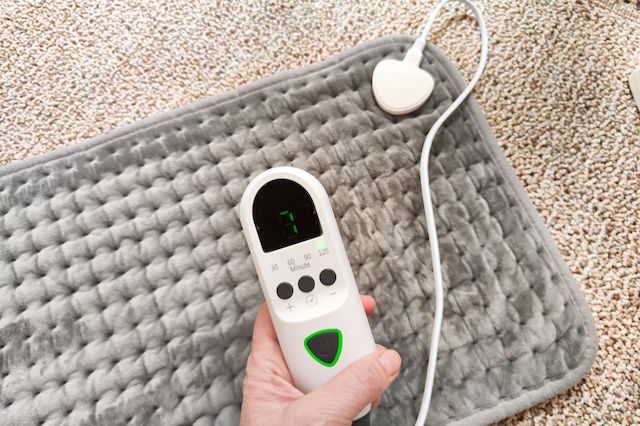
Most electric heating pads are fabric cushions with a cord and a controller. They work while plugged in and maintain a steady temperature for as long as you need, but they keep you close to an outlet.
➡ Choose one if: you want steady warmth for a while, for example on the sofa or at your desk.
There are also rechargeable hot water bottles, which resemble traditional hot water bottles. They are small, around 25 x 17 cm, and often come with a hand pocket. Plug them in for a few minutes until they heat up, then use them cordlessly for as long as they stay warm. You can also find models powered by USB or a power bank, for use in the car or on the go.
➡ Choose one if: you want to move around freely or use it for a short time, for example in bed before you go to sleep.
3. Power and temperature settings
For electric heating pads with a cord, power mainly indicates how quickly they heat up. Most are around 100 watts, which is more than enough for a heating pad.
- Up to 60 watts: for gentle warmth, mainly for small heating pads or USB models.
- 61–100 watts: the most common range, balancing quick preheating with energy consumption.
- Over 100 watts: for faster preheating and larger areas, such as back heating pads.
SkroutzTip: Rechargeable heating pads often have a power rating of 400–500 watts. This applies only to the few minutes they take to charge, not to how warm they get during use.
More important than the wattage is how many temperature settings it has. Basic models have 3, while more advanced ones offer 6 or 10, so you can find the level of warmth that suits you best. A controller with a backlit display helps you see the setting even in the dark.
Popular Electric Heating Pads


4. Safety: what to check
Since a heating pad stays in contact with your body for quite some time, safety is the most important factor.
- Automatic shut-off: the heating pad switches off automatically after a set period, usually 90 minutes, so it won’t stay on if you fall asleep.
- Overheating protection: a sensor shuts it off if the temperature rises above the safe limit.
- Certifications: check that the product bears the CE mark and, ideally, has a safety certification from an independent body.
SkroutzTip: Don’t sleep on the heating pad, fold it while it’s operating, or use it at the maximum temperature for hours. If someone has reduced skin sensitivity, for example due to diabetes, or if it’s for young children, consult a doctor first.
5. Fabric and cleaning
How a heating pad feels against your skin depends on the fabric. Fleece and velour fabrics are soft and warm, while thinner cotton fabrics transfer heat more directly.
For easy cleaning, choose a model with a detachable controller and cord. This lets you put the heating pad or its cover in the washing machine, usually at a low temperature. Always check the manufacturer’s instructions before washing.
6. Extra features that make a difference
- Timer: choose how long it runs, for example 30, 60 or 90 minutes.
- Fast heat-up: the heating pad warms up to the maximum setting for the first few minutes, then drops to your selected temperature.
- Long cord: handy if the outlet isn’t right next to the sofa or bed.
- Massage function: some models, mainly neck and foot warmers, combine heat with vibration for extra relaxation.
Don't forget! By considering the area you want to warm, the type, temperature settings, and safety features, you'll find the electric heating pad that's right for you. Before you decide, take a look at reviews from other users to see how they found it in everyday use.
You can also check out our guide to the best electric heating pads for every need!
This article was created with the help of AI and reviewed and edited by the Skroutz team.
Relevant Articles
The Best Electric Hot Water Bottles for Every Need
What is the best halogen-quartz heater?
Air Heater Buying Guide: Everything You Need to Know
Be the first to leave a comment!