

New energy label: What changed?
The energy label of electrical appliances changed from March 1, 2021, and acquired a new scale from A to G
The energy labeling of electrical appliances has been established by the European Union for many years, aiming to provide consumers with simple, accurate, and comparable information about energy consumption and other important product characteristics. Essentially, the energy labeling, through the label, helps us choose products with lower energy consumption and consequently lower operating costs.
What changed and why?
From March 1, 2021, by decision of the European Union, the new energy label appeared to better serve the needs of consumers.
This change was deemed necessary to offer:
Better information for consumers: The old energy label, with a scale from A+++ to D, was no longer as useful. On one hand, the many "+" classes in the scale and, on the other hand, the classification of most products already in the 2-3 highest classes, confuse consumers and make it difficult for them to distinguish the most energy-efficient products.
Incentives for manufacturers: Through the new labeling, manufacturers are encouraged to produce more efficient and environmentally friendly products.

1. Energy efficiency scale
The energy efficiency scale has changed. This is the most significant change. The A+, A++ and A+++ classes, which also caused the most confusion, have been discontinued. The scale now consists of classes A, B, C, D, E, F, G and will be common for all products.
Devices in class A (green) are those with the lowest energy consumption, while devices in class G (red) are those with the highest consumption.
2. QR code
A QR code is placed in the upper right corner of the label. By scanning the code with a smartphone, you gain access to the European product database “EPREL”, which provides additional information about products bearing energy labeling.
3. Energy Consumption
In the middle section of the label, energy consumption is presented more clearly and is shown in one of the following ways, depending on the product group: in kWh per year, in kWh per 1000 hours, or in kWh per 100 operating cycles.
4. Pictograms
In the lower section of the label, pictograms are displayed that provide information about additional product features. Most pictograms remain the same as those on the old energy label, some have been updated, and some new ones have been added.
Which product groups carry the new energy label?
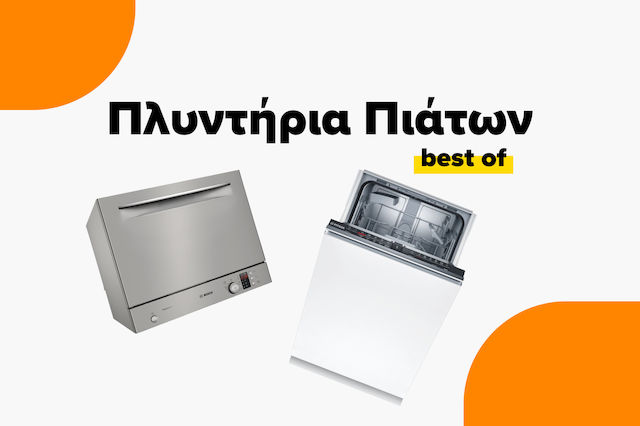
The implementation of the new energy labels across product groups was carried out gradually and has already been completed. Specifically, the product groups that have had it since March 1, 2021 are:
*The final transition for light bulbs will be completed in February 2023, while for the remaining appliances it has already been completed.
What else should I know?
- There is no correspondence between the old and the new energy efficiency scale. Therefore, do not expect a product of class A+++ to be considered class A on the new label. On the contrary, many devices with the previous class even at the highest levels of A+++, have acquired a lower class (e.g. B or even C) based on the new label. This of course does not mean that the energy consumption of the product has changed, it simply changes the way its efficiency is calculated and its ranking on the new A-G scale.
- Based on the new A-G scale, very few products available on the market initially belonged to class A. Therefore, class A at the beginning remained relatively empty for some time and this is intentional to allow room for the development of new technologies and improved products.
Be the first to leave a comment!