Wood Stoves

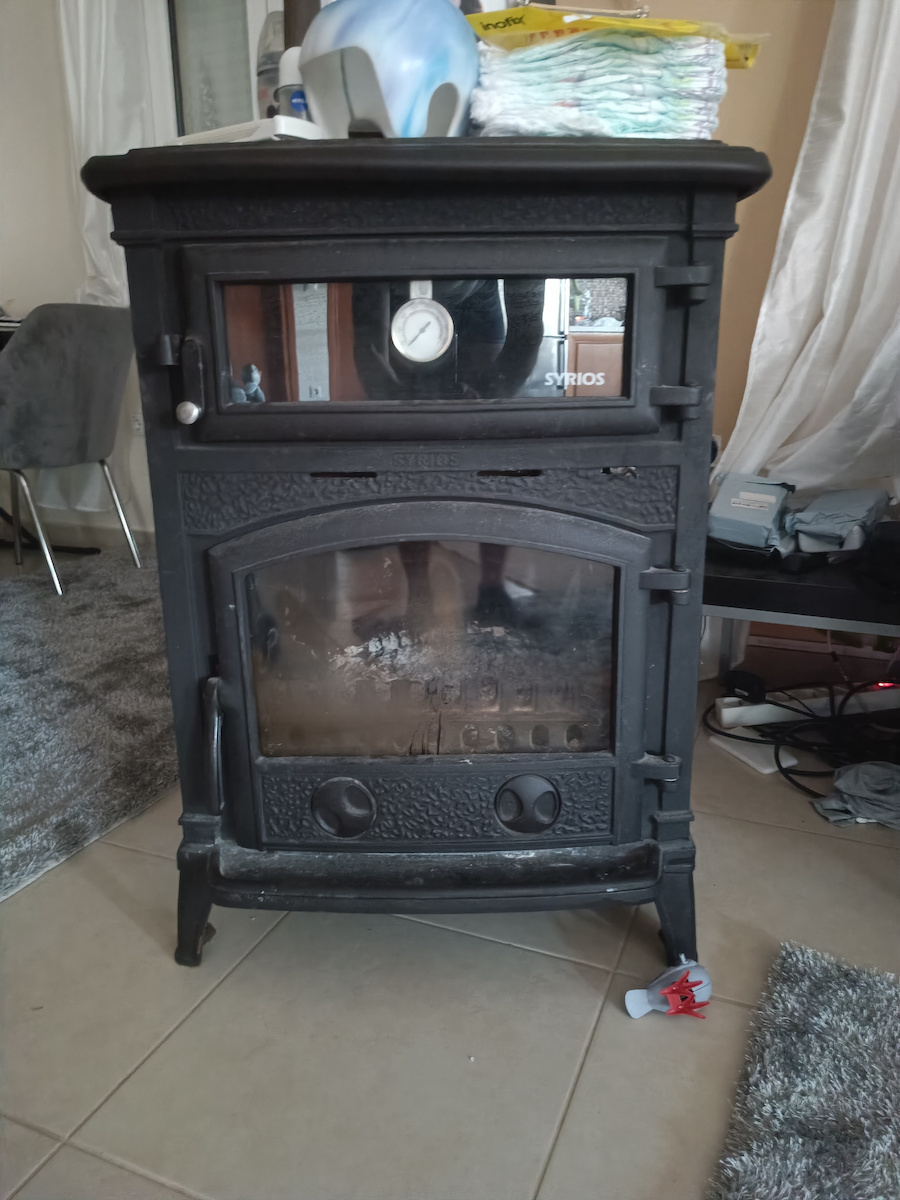
Agorastos SMS 200 Cast Iron Wood Stove with Oven 13.5kW Black

Key features:

  • Material: Cast Iron
  • Weight: 183 Kg
  • Chimney: Ø15
  • Fuel: Wood
  • Efficiency: 14.5 kW (120 sqm)
See full description
750 00
750 Coins 750 Coins
Delivery Wed, 05 Aug - Fri, 07 Aug
56,00 €  
Delivery to your floor available
Do you want it with 41,00 € shipping?
From Biofan
Χαϊδάρι, Αττικής
See Heating & Air Conditioning on the page of Biofan
What if it breaks?

You're covered by the statutory 2-year warranty. Contact us and we'll handle the entire process with the store, ensuring your issue is resolved with prompt support through a repair, replacement, or refund.

What if I change my mind?

No problem, as long as it's within 14 days. We'll come and pick it up (completely free of charge if you have Skroutz Plus) and refund your money.

Is delivery to a floor free?

Yes, we will carry it up to the floor for you, without any restrictions.

Description

Description

The device is used for space heating using solid fuels (natural wooden logs) and can also be used secondarily as a food warming oven.

The device is made of cast iron parts as well as steel metal components (e.g., protective sheet at the back of the firebox, oven, ash drawer, other small components).

The device is manually fed and intended to be installed as a freestanding unit.

The combustion air enters naturally through two (2) circular regulators located on the fire door and the ash drawer panel. The combustion air is directed straight to the base of the firebox without preheating.

The flue gases produced during the combustion process are directed to the flue outlet located on the upper hot plate of the device, diverted by the oven located above the firebox.

The ash is gravity-fed through the lower grate into the ash drawer located beneath the firebox. Access to the ash drawer requires opening the fire door.

The device is not designed for continuous burning.

Manufacturer

See full description

Specifications

Specifications

Product Details

Air Ηeater
No
Radiator
No
Cook Stove (with Oven)
Yes
Chimney diameter
150 mm
Material
Cast Iron
Colour
Black
Weight
183 kg
Wood Heating Stove
No

Performance

Energy Class
A
Total Power
13.5 kW
Power in Air
13.5 kW
Energy Efficiency
70 %
Water Consumption
6.429 kg/h

Dimensions

Height
875 mm
Width
615 mm
Length
550 mm

Important information

Specifications are collected from official manufacturer websites. Please verify the specifications before proceeding with your final purchase. If you notice any problem you can report it here.

See all specifications

Reviews (2)

Reviews

  1. 2
  2. 4 stars
    0
  3. 3 stars
    0
  4. 2 stars
    0
  5. 1 star
    0
Review this product

Reviews by our members

  • ilias.siakavaras
    5
    2 out of 3 members found this review helpful

    If there was half a star, I would give it four and a half. I bought it before it became expensive at 370 euros, and for this price, it is very, very good

    Translated from Greek ·
    • Heating performance
    • Draft
    • Value for money
    • Combustion space size
    • Construction quality
    • Wood consumption
    Did you find this review helpful?
  • markecdl
    5
    33 out of 33 members found this review helpful

    What can I say first about this stove, almost everything is positive.

    Positives
    1) It heats a 55 m2 living room in a 100 m2 house and the heat also reaches the rooms; within 30 minutes the cold is "broken".

    2) It doesn't burn an excessive amount of wood, depending on whether it's October, December, or February, and according to our home's heating needs.

    A very important factor to consider is the heat losses of our house from doors and windows, whether they are 30-year-old wooden ones or new type aluminum. Every house or apartment is different, even in the same building: facing north or south, 1st floor or 5th floor under the roof, which will have significant losses from the ceiling. The location of the house, the height of the apartment, or if you live on the top floor and whether the roof is insulated, etc. There are many factors, anyway, that affect the heat losses and the heating or, conversely, the cooling needed in summer with air conditioning.

    3) This stove takes large logs.

    (IMPORTANT) Especially if you buy them, because large logs are cheaper than small ones due to less labor with the woodcutter (which makes sense). Also, less work for us as we need to load the stove fewer times.

    Anyone who works with a woodcutter understands exactly what I mean about cutting and carrying afterward.

    Also, when you put a large log in the stove, you forget about feeding it for 1-3 hours (depending on the supply and the need for heating).

    4) It has an oven, so you can easily heat up yesterday's food and also cook, but don't be fooled into thinking it's a powerful oven for baking; it's not as strong as I thought or would like. Especially if there's no electricity (power outage in a village), since the stove is installed in a country house without any electricity for some reason.

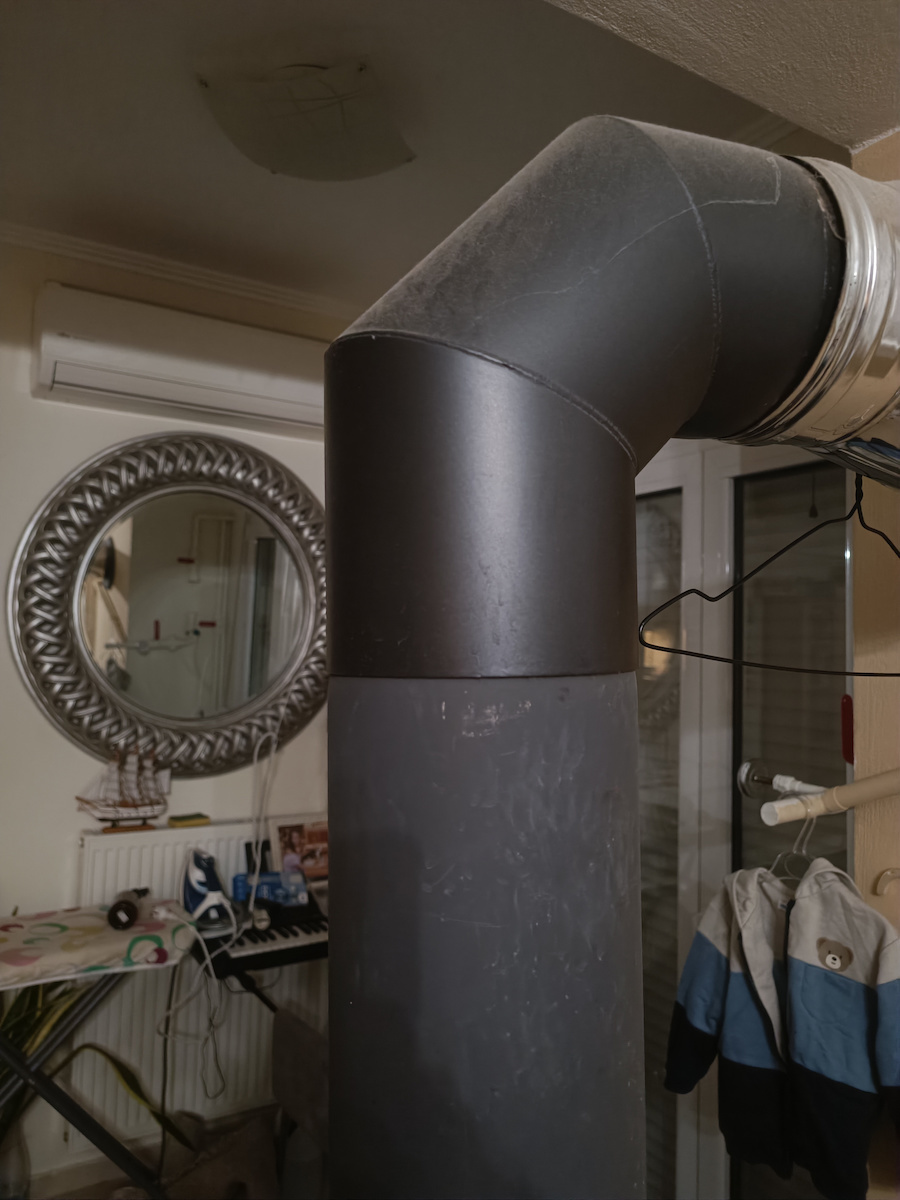
    5) Important: Use BLACK STEEL 2MM MAT thick sheet metal HEAVY DUTY pipes (double the price of stainless steel) INSIDE the house until they exit the wall for even more efficiency and economy.

    The savings here are quite significant because the pipes further help with heating inside the house until the smoke exits.

    In Norway, where I lived, 9 out of 10 houses have cast iron stoves (Norwegian made), and much smaller than this one in size.

    Negatives
    1) Assembling the stove is simply screwing one side to the other, so you may need to use some black heat-resistant silicone in places where there might be smoke leakage (if any). You can check this with a lighter. This is done with a silicone gun. It's nothing major, solved with 10 euros.

    2) The handles get incredibly hot, so you'll need to find a personal solution, either by adding heat-resistant rope, attaching some wood, or using a special kitchen glove each time. This problem should have been solved at the factory.

    3) From what I've learned, the cast iron is of Chinese origin, and don't believe those who say it's Greek, not that this is necessarily bad. Also, the name they give it is supposedly Greek... I've seen photos online of exactly the same stove from China; here they just assemble and sell them as Greek. Also, depending on the factory or batch, the stove's front may differ by about 5% from the photo.

    French cast iron is the top in Europe, as is Spanish, but it costs. Also, there are no such stoves with ovens in Greece, only inserts with cast iron instead of steel for air-heated fireplaces, etc. If you find a European-made one, the price for this stove would be at least 2500-3000€ from France, Italy, or Spain.

    4) It may not have secondary/tertiary combustion technology that some companies advertise, but it easily does its job and more, ESPECIALLY if you install a damper (25-35€), which I 100% recommend for extra economy.

    (P.S.) IMPORTANT
    As I wrote above, use heavy-duty black pipes inside (they cost double), and add a damper, which reduces the air flow and thus saves on wood consumption. There are days when it's very windy, and either the stove smokes or the chimney draws too much, burning a lot of wood; with the damper, we reduce the air flow entering due to wind, or when we stop adding wood and go to sleep, we close the damper about 80% to keep the fire going longer. In the morning, when I wake up, there are still coals inside, which helps to relight the stove easily. For the ashes, you should find an iron or aluminum container so that in the morning, if there are still coals, you don't burn yourself or the container.

    I hope I help even one person who reads my advice and trusts me, someone who wants to solve the heating of a house, a very important issue in winter. The precious warmth of a home brings joy. Imagine gatherings by the stove/fireplace with family while it's cold outside and warm inside, or with good company.

    What I want to say is that you should clean the pipes inside and out at least once a year, depending on use and the setup you have, either personally or with a professional. So, buying a stove also involves personal work; it's not like oil heating where you just press a button and the radiators turn on, whatever the cost. It has its pros and cons. We choose and decide.

    Summary
    It's worth it, even with its cons. 9/10 Rating

    Thank you

    Translated from Greek ·
    • Heating performance
    • Draft
    • Combustion space size
    • Wood consumption
    • Value for money
    • Construction quality
    Did you find this review helpful?
  • If there was half a star, I would give it four and a half. I bought it before it became expensive at 370 euros, and for this price, it is very, very good

    Translated from Greek ·
    2
  • What can I say first about this stove, almost everything is positive.

    Positives
    1) It heats a 55 m2 living room in a 100 m2 house and the heat also reaches the rooms; within 30 minutes the cold is "broken".

    2) It doesn't burn an excessive amount of wood, depending on whether it's October, December, or February, and according to our home's heating needs.

    A very important factor to consider is the heat losses of our house from doors and windows, whether they are 30-year-old wooden ones or new type aluminum. Every house or apartment is different, even in the same building: facing north or south, 1st floor or 5th floor under the roof, which will have significant losses from the ceiling. The location of the house, the height of the apartment, or if you live on the top floor and whether the roof is insulated, etc. There are many factors, anyway, that affect the heat losses and the heating or, conversely, the cooling needed in summer with air conditioning.

    3) This stove takes large logs.

    (IMPORTANT) Especially if you buy them, because large logs are cheaper than small ones due to less labor with the woodcutter (which makes sense). Also, less work for us as we need to load the stove fewer times.

    Anyone who works with a woodcutter understands exactly what I mean about cutting and carrying afterward.

    Also, when you put a large log in the stove, you forget about feeding it for 1-3 hours (depending on the supply and the need for heating).

    4) It has an oven, so you can easily heat up yesterday's food and also cook, but don't be fooled into thinking it's a powerful oven for baking; it's not as strong as I thought or would like. Especially if there's no electricity (power outage in a village), since the stove is installed in a country house without any electricity for some reason.

    5) Important: Use BLACK STEEL 2MM MAT thick sheet metal HEAVY DUTY pipes (double the price of stainless steel) INSIDE the house until they exit the wall for even more efficiency and economy.

    The savings here are quite significant because the pipes further help with heating inside the house until the smoke exits.

    In Norway, where I lived, 9 out of 10 houses have cast iron stoves (Norwegian made), and much smaller than this one in size.

    Negatives
    1) Assembling the stove is simply screwing one side to the other, so you may need to use some black heat-resistant silicone in places where there might be smoke leakage (if any). You can check this with a lighter. This is done with a silicone gun. It's nothing major, solved with 10 euros.

    2) The handles get incredibly hot, so you'll need to find a personal solution, either by adding heat-resistant rope, attaching some wood, or using a special kitchen glove each time. This problem should have been solved at the factory.

    3) From what I've learned, the cast iron is of Chinese origin, and don't believe those who say it's Greek, not that this is necessarily bad. Also, the name they give it is supposedly Greek... I've seen photos online of exactly the same stove from China; here they just assemble and sell them as Greek. Also, depending on the factory or batch, the stove's front may differ by about 5% from the photo.

    French cast iron is the top in Europe, as is Spanish, but it costs. Also, there are no such stoves with ovens in Greece, only inserts with cast iron instead of steel for air-heated fireplaces, etc. If you find a European-made one, the price for this stove would be at least 2500-3000€ from France, Italy, or Spain.

    4) It may not have secondary/tertiary combustion technology that some companies advertise, but it easily does its job and more, ESPECIALLY if you install a damper (25-35€), which I 100% recommend for extra economy.

    (P.S.) IMPORTANT
    As I wrote above, use heavy-duty black pipes inside (they cost double), and add a damper, which reduces the air flow and thus saves on wood consumption. There are days when it's very windy, and either the stove smokes or the chimney draws too much, burning a lot of wood; with the damper, we reduce the air flow entering due to wind, or when we stop adding wood and go to sleep, we close the damper about 80% to keep the fire going longer. In the morning, when I wake up, there are still coals inside, which helps to relight the stove easily. For the ashes, you should find an iron or aluminum container so that in the morning, if there are still coals, you don't burn yourself or the container.

    I hope I help even one person who reads my advice and trusts me, someone who wants to solve the heating of a house, a very important issue in winter. The precious warmth of a home brings joy. Imagine gatherings by the stove/fireplace with family while it's cold outside and warm inside, or with good company.

    What I want to say is that you should clean the pipes inside and out at least once a year, depending on use and the setup you have, either personally or with a professional. So, buying a stove also involves personal work; it's not like oil heating where you just press a button and the radiators turn on, whatever the cost. It has its pros and cons. We choose and decide.

    Summary
    It's worth it, even with its cons. 9/10 Rating

    Thank you

    Translated from Greek ·
    33
  • See all
Questions (3)

Questions

6 users have this product and can help you

Ask for the product
fokianos_periklis

Καλησπέρα, εκτός από το μαγείρεμα με φούρνο, μπορώ να μαγειρέψω μήπως και με κατσαρόλα, αν την ακουμπήσω στο πάνω μέρος του φούρνου; Ευχαριστώ!

markecdl

Η απάντηση είναι και ναι και όχι...... Ανάλογα το πόσο την φορτώνεις και να καίει η ξυλόσομπα.....

markecdl

Ανάλογα την εγκατάσταση που θα κάνεις σου προτείνω να την κάνεις από κάποιον εξειδικευμένο για να μην έχεις προβλήματα....
Συμβουλη: εσωτερικά να βάλεις μαύρους εμαγιέ σωλήνες για καλύτερη απόδοση εντός του χώρου τοποθέτησης τα λεφτά τα παραπάνω της εγκατάστασης μην τα λυπηθείς σε καμία περίπτωση!

kkaps

Τι θερμοκρασίες μπορεί να φτάσει ο φούρνος και πόσο εύκολα τις πιάνει; Μπορεί να φτάσει πάνω από 400 βαθμούς;

See all questions (3)

Description & Specifications

The device is used for space heating using solid fuels (natural wooden logs) and can also be used secondarily as a food warming oven.

The device is made of cast iron parts as well as steel metal components (e.g., protective sheet at the back of the firebox, oven, ash drawer, other small components).

The device is manually fed and intended to be installed as a freestanding unit.

The combustion air enters naturally through two (2) circular regulators located on the fire door and the ash drawer panel. The combustion air is directed straight to the base of the firebox without preheating.

The flue gases produced during the combustion process are directed to the flue outlet located on the upper hot plate of the device, diverted by the oven located above the firebox.

The ash is gravity-fed through the lower grate into the ash drawer located beneath the firebox. Access to the ash drawer requires opening the fire door.

The device is not designed for continuous burning.

Manufacturer

Product Details

Air Ηeater
No
Radiator
No
Cook Stove (with Oven)
Yes
Chimney diameter
150 mm
Material
Cast Iron
Colour
Black
Weight
183 kg
Wood Heating Stove
No

Performance

Energy Class
A
Total Power
13.5 kW
Power in Air
13.5 kW
Energy Efficiency
70 %
Water Consumption
6.429 kg/h

Dimensions

Height
875 mm
Width
615 mm
Length
550 mm

Important information

Specifications are collected from official manufacturer websites. Please verify the specifications before proceeding with your final purchase. If you notice any problem you can report it here.

Reviews (2)

  1. 2
  2. 4 stars
    0
  3. 3 stars
    0
  4. 2 stars
    0
  5. 1 star
    0
Review this product

Reviews by our members

  • ilias.siakavaras
    5
    2 out of 3 members found this review helpful

    If there was half a star, I would give it four and a half. I bought it before it became expensive at 370 euros, and for this price, it is very, very good

    Translated from Greek ·
    • Heating performance
    • Draft
    • Value for money
    • Combustion space size
    • Construction quality
    • Wood consumption
    Did you find this review helpful?
  • markecdl
    5
    33 out of 33 members found this review helpful

    What can I say first about this stove, almost everything is positive.

    Positives
    1) It heats a 55 m2 living room in a 100 m2 house and the heat also reaches the rooms; within 30 minutes the cold is "broken".

    2) It doesn't burn an excessive amount of wood, depending on whether it's October, December, or February, and according to our home's heating needs.

    A very important factor to consider is the heat losses of our house from doors and windows, whether they are 30-year-old wooden ones or new type aluminum. Every house or apartment is different, even in the same building: facing north or south, 1st floor or 5th floor under the roof, which will have significant losses from the ceiling. The location of the house, the height of the apartment, or if you live on the top floor and whether the roof is insulated, etc. There are many factors, anyway, that affect the heat losses and the heating or, conversely, the cooling needed in summer with air conditioning.

    3) This stove takes large logs.

    (IMPORTANT) Especially if you buy them, because large logs are cheaper than small ones due to less labor with the woodcutter (which makes sense). Also, less work for us as we need to load the stove fewer times.

    Anyone who works with a woodcutter understands exactly what I mean about cutting and carrying afterward.

    Also, when you put a large log in the stove, you forget about feeding it for 1-3 hours (depending on the supply and the need for heating).

    4) It has an oven, so you can easily heat up yesterday's food and also cook, but don't be fooled into thinking it's a powerful oven for baking; it's not as strong as I thought or would like. Especially if there's no electricity (power outage in a village), since the stove is installed in a country house without any electricity for some reason.

    5) Important: Use BLACK STEEL 2MM MAT thick sheet metal HEAVY DUTY pipes (double the price of stainless steel) INSIDE the house until they exit the wall for even more efficiency and economy.

    The savings here are quite significant because the pipes further help with heating inside the house until the smoke exits.

    In Norway, where I lived, 9 out of 10 houses have cast iron stoves (Norwegian made), and much smaller than this one in size.

    Negatives
    1) Assembling the stove is simply screwing one side to the other, so you may need to use some black heat-resistant silicone in places where there might be smoke leakage (if any). You can check this with a lighter. This is done with a silicone gun. It's nothing major, solved with 10 euros.

    2) The handles get incredibly hot, so you'll need to find a personal solution, either by adding heat-resistant rope, attaching some wood, or using a special kitchen glove each time. This problem should have been solved at the factory.

    3) From what I've learned, the cast iron is of Chinese origin, and don't believe those who say it's Greek, not that this is necessarily bad. Also, the name they give it is supposedly Greek... I've seen photos online of exactly the same stove from China; here they just assemble and sell them as Greek. Also, depending on the factory or batch, the stove's front may differ by about 5% from the photo.

    French cast iron is the top in Europe, as is Spanish, but it costs. Also, there are no such stoves with ovens in Greece, only inserts with cast iron instead of steel for air-heated fireplaces, etc. If you find a European-made one, the price for this stove would be at least 2500-3000€ from France, Italy, or Spain.

    4) It may not have secondary/tertiary combustion technology that some companies advertise, but it easily does its job and more, ESPECIALLY if you install a damper (25-35€), which I 100% recommend for extra economy.

    (P.S.) IMPORTANT
    As I wrote above, use heavy-duty black pipes inside (they cost double), and add a damper, which reduces the air flow and thus saves on wood consumption. There are days when it's very windy, and either the stove smokes or the chimney draws too much, burning a lot of wood; with the damper, we reduce the air flow entering due to wind, or when we stop adding wood and go to sleep, we close the damper about 80% to keep the fire going longer. In the morning, when I wake up, there are still coals inside, which helps to relight the stove easily. For the ashes, you should find an iron or aluminum container so that in the morning, if there are still coals, you don't burn yourself or the container.

    I hope I help even one person who reads my advice and trusts me, someone who wants to solve the heating of a house, a very important issue in winter. The precious warmth of a home brings joy. Imagine gatherings by the stove/fireplace with family while it's cold outside and warm inside, or with good company.

    What I want to say is that you should clean the pipes inside and out at least once a year, depending on use and the setup you have, either personally or with a professional. So, buying a stove also involves personal work; it's not like oil heating where you just press a button and the radiators turn on, whatever the cost. It has its pros and cons. We choose and decide.

    Summary
    It's worth it, even with its cons. 9/10 Rating

    Thank you

    Translated from Greek ·
    • Heating performance
    • Draft
    • Combustion space size
    • Wood consumption
    • Value for money
    • Construction quality
    Did you find this review helpful?
  • If there was half a star, I would give it four and a half. I bought it before it became expensive at 370 euros, and for this price, it is very, very good

    Translated from Greek ·
    2
  • What can I say first about this stove, almost everything is positive.

    Positives
    1) It heats a 55 m2 living room in a 100 m2 house and the heat also reaches the rooms; within 30 minutes the cold is "broken".

    2) It doesn't burn an excessive amount of wood, depending on whether it's October, December, or February, and according to our home's heating needs.

    A very important factor to consider is the heat losses of our house from doors and windows, whether they are 30-year-old wooden ones or new type aluminum. Every house or apartment is different, even in the same building: facing north or south, 1st floor or 5th floor under the roof, which will have significant losses from the ceiling. The location of the house, the height of the apartment, or if you live on the top floor and whether the roof is insulated, etc. There are many factors, anyway, that affect the heat losses and the heating or, conversely, the cooling needed in summer with air conditioning.

    3) This stove takes large logs.

    (IMPORTANT) Especially if you buy them, because large logs are cheaper than small ones due to less labor with the woodcutter (which makes sense). Also, less work for us as we need to load the stove fewer times.

    Anyone who works with a woodcutter understands exactly what I mean about cutting and carrying afterward.

    Also, when you put a large log in the stove, you forget about feeding it for 1-3 hours (depending on the supply and the need for heating).

    4) It has an oven, so you can easily heat up yesterday's food and also cook, but don't be fooled into thinking it's a powerful oven for baking; it's not as strong as I thought or would like. Especially if there's no electricity (power outage in a village), since the stove is installed in a country house without any electricity for some reason.

    5) Important: Use BLACK STEEL 2MM MAT thick sheet metal HEAVY DUTY pipes (double the price of stainless steel) INSIDE the house until they exit the wall for even more efficiency and economy.

    The savings here are quite significant because the pipes further help with heating inside the house until the smoke exits.

    In Norway, where I lived, 9 out of 10 houses have cast iron stoves (Norwegian made), and much smaller than this one in size.

    Negatives
    1) Assembling the stove is simply screwing one side to the other, so you may need to use some black heat-resistant silicone in places where there might be smoke leakage (if any). You can check this with a lighter. This is done with a silicone gun. It's nothing major, solved with 10 euros.

    2) The handles get incredibly hot, so you'll need to find a personal solution, either by adding heat-resistant rope, attaching some wood, or using a special kitchen glove each time. This problem should have been solved at the factory.

    3) From what I've learned, the cast iron is of Chinese origin, and don't believe those who say it's Greek, not that this is necessarily bad. Also, the name they give it is supposedly Greek... I've seen photos online of exactly the same stove from China; here they just assemble and sell them as Greek. Also, depending on the factory or batch, the stove's front may differ by about 5% from the photo.

    French cast iron is the top in Europe, as is Spanish, but it costs. Also, there are no such stoves with ovens in Greece, only inserts with cast iron instead of steel for air-heated fireplaces, etc. If you find a European-made one, the price for this stove would be at least 2500-3000€ from France, Italy, or Spain.

    4) It may not have secondary/tertiary combustion technology that some companies advertise, but it easily does its job and more, ESPECIALLY if you install a damper (25-35€), which I 100% recommend for extra economy.

    (P.S.) IMPORTANT
    As I wrote above, use heavy-duty black pipes inside (they cost double), and add a damper, which reduces the air flow and thus saves on wood consumption. There are days when it's very windy, and either the stove smokes or the chimney draws too much, burning a lot of wood; with the damper, we reduce the air flow entering due to wind, or when we stop adding wood and go to sleep, we close the damper about 80% to keep the fire going longer. In the morning, when I wake up, there are still coals inside, which helps to relight the stove easily. For the ashes, you should find an iron or aluminum container so that in the morning, if there are still coals, you don't burn yourself or the container.

    I hope I help even one person who reads my advice and trusts me, someone who wants to solve the heating of a house, a very important issue in winter. The precious warmth of a home brings joy. Imagine gatherings by the stove/fireplace with family while it's cold outside and warm inside, or with good company.

    What I want to say is that you should clean the pipes inside and out at least once a year, depending on use and the setup you have, either personally or with a professional. So, buying a stove also involves personal work; it's not like oil heating where you just press a button and the radiators turn on, whatever the cost. It has its pros and cons. We choose and decide.

    Summary
    It's worth it, even with its cons. 9/10 Rating

    Thank you

    Translated from Greek ·
    33
  • See all
750,00 €
56,00 €  
Delivery to your floor available