Spyros Melas
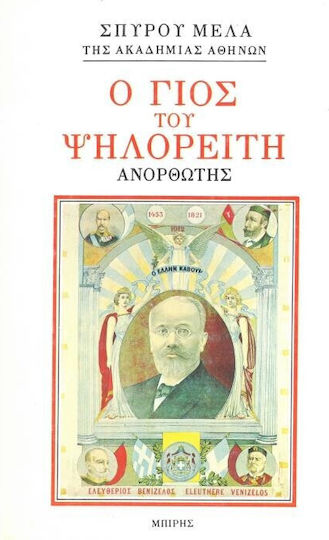
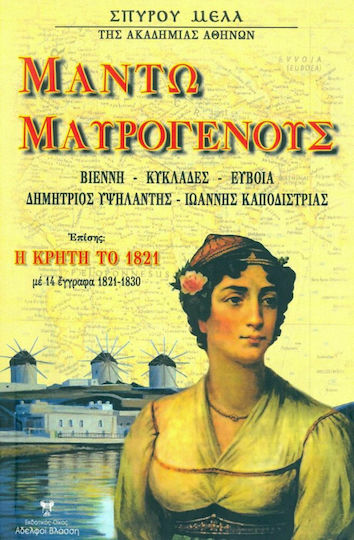
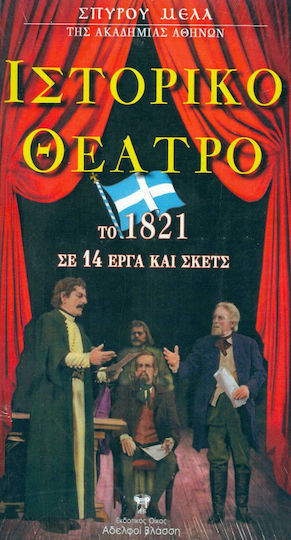
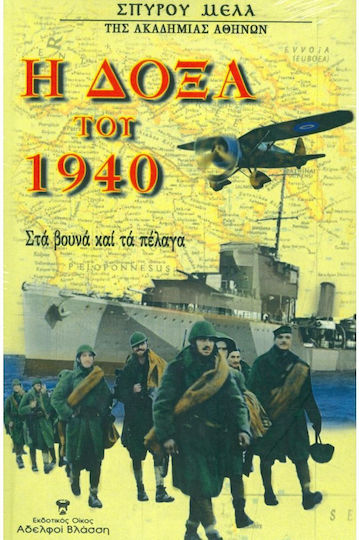
Spyros Melas (1882 - 1966). Spyros Melas was born in Nafpaktos, the son of a magistrate. After the death of his father, he moved as a child to Piraeus, where he completed high school. He attended the Law School of the University of Athens but abandoned his studies as he was drawn early on to journalism and the arts. By the age of twenty, he was a regular contributor to "Astys" and later to "Acropolis," where he published his early literary works, influenced by French feuilleton writing. He worked as an editor for many Athenian newspapers ("Empros," "Imerisia Nea," "Imerisios Tilegraphos," "Kathimerini," "Ethnos," "Eleftheria," "Athinaika Nea," etc.), as a columnist, correspondent in European countries, the USA, and Egypt, and as the publisher of the magazines "Idea" (1933-1934) and "Hellenic Creation" (1948-1954). He was also involved in theater as a director, actor, and drama teacher. His experience in Paris, where he lived for extended periods, played a significant role in his turn to theater. His diverse activities spanned the first half of the 20th century, and he actively participated in the political and social developments of his time. Starting from the progressive political faction, he moved around 1910 to socialism, then to Venizelos' party, and finally, through the magazine "Idea," to the Greek-centric idealism followed by a segment of the Generation of the '30s, which included Giorgos Theotokas. An academic since 1935, he leaned towards ideological conservatism, which provoked mixed opinions from his contemporaries about him. He documented his experiences from his travels and his time as a war correspondent and sergeant on the Balkan front in the volumes "From My Travels," "America," and "War Pages." His theatrical work shows strong influences from Ibsen's dramaturgy and Nietzsche's philosophy, with a clear social orientation in his writing. Founder of the Art Theater (1925) and the Free Stage (1929 with Marika Kotopouli and Dimitris Myrat), he attended directing workshops in Paris in 1928 and in 1935 took on the role of artistic director at the New Theater troupe of Mrs. Aliki and Kostas Mousouris. His directing activities contributed to the renewal of the Athenian theatrical repertoire and its alignment with the European counterpart, and he wrote plays such as "The Son of the Shadow," "The Red Shirt," "The White and the Black," "One Night, One Life," "Daddy Gets Educated," "Papaflessas," among others. He also engaged in poetry (in his youth), short story writing, and primarily in novelistic historiography, where he stood out for the vividness of his style and the economy of his writing. He died in Athens. For more biographical details on Spyros Melas, see Nestoras Matsas, "Spyros Melas," magazine "Nea Estia," vol. M, issue 947 (Christmas 1966), p.13, Dimitris Giakos, "Melas Spyros," in "Great Encyclopedia of Modern Greek Literature," vol. 10, Athens: Haris Patsis, n.d., Ch.D. Gounelas, "Melas Spyros," in "World Biographical Dictionary," vol. 6, Athens, Ekdotiki Athinon, 1987, Vangelis Chatzivasileiou, "Spyros Melas," in "Our Older Prose; from its Beginnings to the First World War," vol. IA (1900 - 1914), Athens, Sokolis, 1998, p. Alexis Ziras, Christina Lyssari, "Melas Spyros" in "Dictionary of Modern Greek Literature", Athens, Patakis, 2007, pp. 1378-79.
(Source: Archive of Greek Writers, EKEBI)