

Heat Pump for the Home!
Are you getting ready for winter?
Are you worried about the central heating in your home? About how to reduce energy costs and the impact it has on the environment?
With the increase in fuel, gas, and electricity prices, it is imperative to have a more efficient heating system in our homes. Below we will talk about one of the most efficient heating systems, heat pumps.
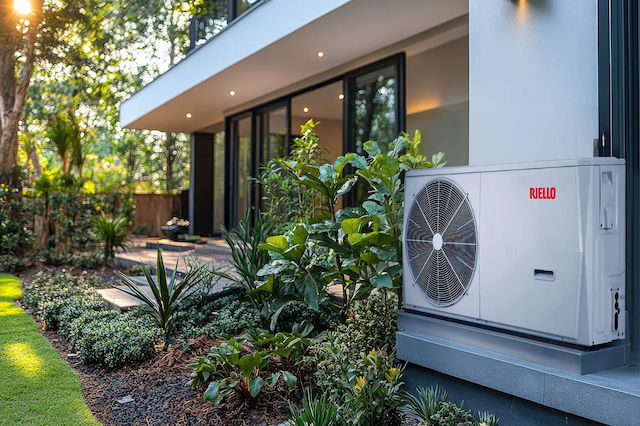
A heat pump is an electrical device that removes heat from one space or the environment and transfers it to another. It alternates the cooling cycle of the system, resulting in transferring the ambient air heat to the home through a hydraulic water system, such as underfloor heating, fan coils, and radiators.

Heat pumps use electricity only to operate their mechanical parts. Therefore, we can consider that unlike conventional systems, they require only 25% energy while the remaining 75% is sourced from the environment. This results in high levels of efficiency. Additionally, it is very important to note that the heat pump is much smaller, safer, and cleaner than the majority of heating systems (oil - gas - pellet boilers, wood stoves, etc.).
Now, regarding the choice of heating for our home, heat pumps are currently the most economical heating method (according to a study by the National Technical University of Athens) compared to any other means, as they can achieve energy savings of up to 80%! Another advantage of the heat pump is that it has a long lifespan with minimal maintenance (cleaning & maintenance annually).
How can we install a heat pump at home?
The installation of a heat pump is similar to the installation of an air conditioner, only the pump will supply the entire house. We place a unit outside and connect it to the house's radiators with pipes.
If you want to replace an existing water heating system, you will use the existing pipe installation. If you are in an apartment and want to become independent from the building, you can install a pump in your apartment according to your needs, placing the pipes wherever you need them.
As I mentioned above, we can use heat pumps for underfloor heating, with fan coil units, and radiators. If you choose a heat pump only for heating, then your options are underfloor heating or radiators.
You will find radiators in the corresponding category, depending on your needs.
Radiators


If you choose a heat pump for heating and cooling, the Fan Coil units are what you need.
The advantages of heat pumps include the fact that they can also heat the water in our home. This can be achieved by purchasing a heat pump with a built-in boiler or by connecting the pump to a separate boiler.
If you want to change your home's central heating to a heat pump, there are many options depending on your needs. I would advise you to consult a professional specialist for a proper study of your space based on the losses and needs of your home before taking any steps.
Note: The initial cost of a heat pump is high, but it will compensate you with savings based on its performance! We are investing in a system that falls under renewable energy technologies. Fuel and electricity costs may have risen, but modern technologies make the real difference, and technology is what drives the economy!
Tip: Heat pumps are part of the subsidized "Home Savings" program.


Be the first to leave a comment!