

Which juicer should I choose? Slow Masticating or Centrifugal?
Do you want to enjoy a fresh juice from fruits or vegetables, either in the morning or at any other time of the day? Good choice! A fresh juice will boost your body and provide it with many nutrients and substances it needs.
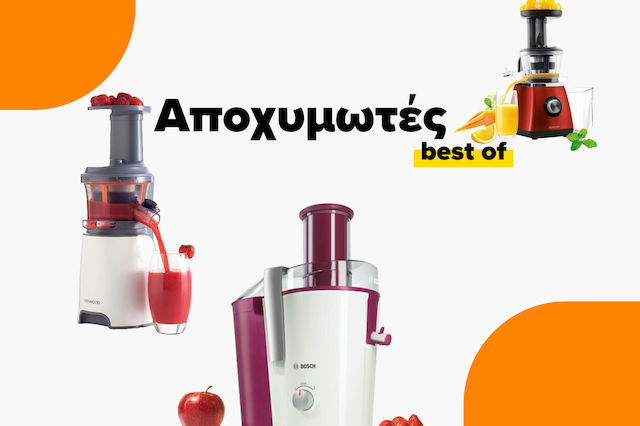
Of course, the fastest and easiest way to do this is with a juicer. You simply put in the ingredients and enjoy. However, there are two types of juicers: the classic centrifugal and the slow masticating (cold press). What are the advantages and disadvantages of each?
Centrifugal Juicer
The centrifugal juicer uses a large conical blade-mesh, which rotates at high speed to separate the juice from the flesh of the ingredients. The juice from fruits and vegetables passes into the glass through the holes in the mesh, while the dry matter, or pulp, remains in the waste container.
The advantages of the centrifugal juicer are its low purchase cost, the faster juice preparation time, and less pulp waste.
As for the disadvantages, you generally get less juice per fruit, it is noisier during operation, and it is minimally efficient for juicing greens, herbs, and nuts.
Slow Masticating Juicer (Cold Press)
The slow masticating juicer, or slow-speed juicer, has vertical or horizontal augers that crush and then squeeze the ingredients at low speed. It has two outlets, one where the dry matter (pulp) is discarded and another where the juice comes out.
Its advantages are that you get more juice per fruit and vegetable, the noise during operation is quite low, and it is suitable for extracting juice from greens, herbs, and of course nuts.
As for the disadvantages, it has a higher purchase cost than centrifugal juicers and, due to its special operating method, juice preparation takes longer.



Be the first to leave a comment!