



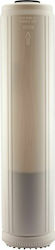
Watts 20" 5 μm (Mikrometer) OFTWHRM
Verwendung: Wasserenthärter
Kostenlos LieferungÜbermorgenAd380,00 € 380 €/Stück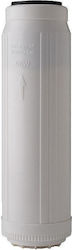
Watts 10" 5 μm (Mikrometer) OF110RM
Verwendung: Zentrales Wasserfiltersystem
LieferungÜbermorgen100,00 € 100 €/Stück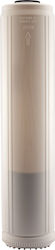
Watts 20" 5 μm (Mikrometer) OFTWH-RM-R
Verwendung: Wasserenthärter
Kostenlos LieferungÜbermorgen280,00 € 280 €/StückWatts 20" 5 μm (Mikrometer) OFTWHRM
Verwendung: Wasserenthärter
Kostenlos LieferungÜbermorgen380,00 € 380 €/Stück
Filter
- Unter der Spüle: Der Filter wird unter der Küchenarbeitsplatte installiert und an die Kaltwasserversorgung des Küchenhahns angeschlossen.
- Zentrales Wasserfiltersystem: Es wird an der Hauptwasserversorgung des Hauses (an den Zählern) installiert und filtert das Wasser für das gesamte Haus.
- Arbeitsplatte: Das Gerät wird auf der Küchenarbeitsplatte platziert und mit dem Wasserhahn verbunden.
- für Wasserhahn: Der Filter wird direkt am Küchenhahn installiert.
- Krug: Der Filter wird intern in einem speziellen Krug platziert.
- Umkehrosmose (RO): Wasser wird unter Druck durch eine Membran gepresst, wodurch Wassermoleküle hindurchgelangen, aber Verunreinigungen wie Bakterien, Viren und gelöste Metalle wie Kalzium und Magnesium blockiert werden.
- Waschmaschine: Es wird entweder am Wassereinlass oder im Inneren der Waschmaschine platziert, um Kalk und andere Partikel zurückzuhalten.
- Dusche: Wird an den Ein- oder Auslass des Duschschlauchanschlusses angeschlossen.
- Wasserenthärter: Wenn es Probleme mit der Wasserhärte gibt, entfernen diese Filter Kalzium und Magnesium und ersetzen sie durch andere Ionen, in der Regel Natrium.










- Kalk / Härte: Reduziert Salze und Härte des Wassers für reineres Wasser und weniger Salze in deinen Geräten.
- Schwermetalle: Reduziert Schwermetalle wie Blei und Kupfer in deinem Wasser.
- Sedimente & Partikel: Halte Sand, Rost und andere schwebende Partikel von deinem Wasser fern.
- Mikroplastik: Entfernt kleine Kunststoffpartikel, die sich in deinem Wasser befinden könnten.
- Chlor: Reduziert Chlor und den unangenehmen Geschmack oder Geruch des Wassers.
- Es handelt sich um die Größe und den Typ des Filters. Um das richtige Ersatzfilter zu wählen, solltest du die Größe und den Typ des Filtersystems kennen.
- Aktivkohle: Absorbiert und entfernt Verunreinigungen wie Chlor und Schwermetalle, verbessert die Qualität und den Geschmack des Wassers.
- Keramik: Es hat kleine Poren, die Wasser durchlassen, während Mikroorganismen zurückgehalten werden.
- Umkehrosmose-Membran: Es verfügt über eine halbdurchlässige Membran, die Wasser unter Druck hindurchlässt und dabei Salze, Chemikalien und Mikroorganismen entfernt.
- Polypropylen: Leichtes und haltbares Material, das größere Verunreinigungen wie Schmutz, Sand und Rost filtert.
- Harz: Entfernt Substanzen wie Kalzium und Magnesium aus dem Wasser und behandelt die "Härte" des Wassers.
- Gewinde: Es besteht aus Drähten oder Fäden, die zu einem porösen Gewebe verwoben sind. Es entfernt größere Partikel wie Schmutz und Sand aus dem Wasser.
- Die Maßeinheit für Ersatzfilter von Wasserfiltern ist das gleiche wie ein Millionstel Meter (1 μm = 1/1000 mm). Je niedriger der Mikronwert ist, desto besser und effektiver ist die Filtration.
- Stellt die maximale Wirkdauer des Filters dar, die direkt von der Wassermenge und -härte beeinflusst wird.