I used it to make mortar instead of plain cement. 1 to 1 with fine sand. The results were impressive. Final material thickness 10 mm. The sand grains bind the material better. Instead of applying 2 or 3 coats plain, I applied one coat mixed with sand. Much greater strength. And on top of that you also apply the elastic for perfect results. The space was a semi-basement with a moisture problem due to hydrostatic pressure!
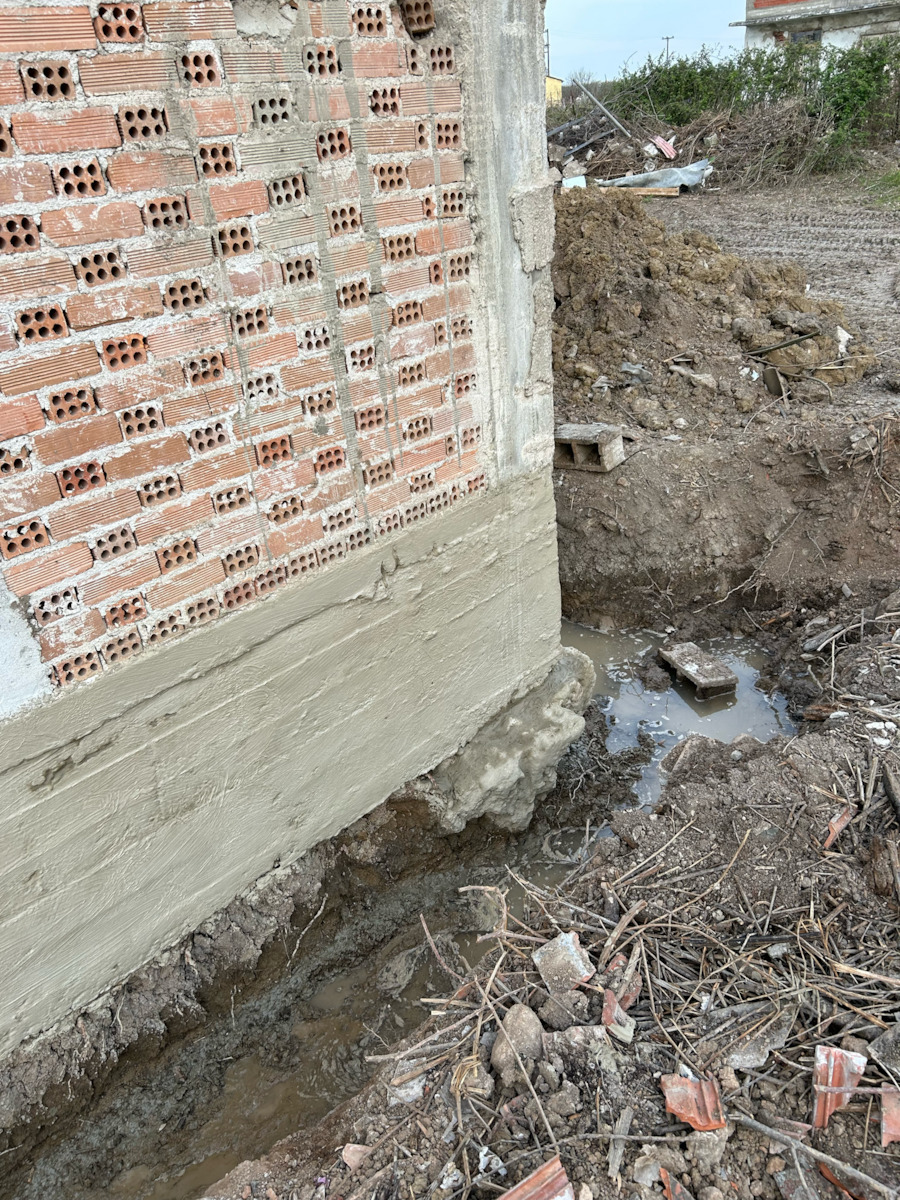
I’m coming back one month after application. Unfortunately, although the product bonded very well with the sand along the entire length where it was applied, that is, on an area of 1x1 square meter, at the end not only did moisture appear, but water was coming out by the bucketful. This was after a summer storm. What will happen in winter with hydrostatic pressures that will last for months? The material is indeed good along the entire length of application, but it does not bond with the slab underneath. It creates a layer where the water passes between the aquamat layer and the basement slab. It should be noted that at the end of the layer and along the entire length and width of the 100 sq. m basement slab, I applied 4 coats of two-component aquamat elastic. Very expensive. Don’t imagine some basement with depth. This is a house from the 1950s where the road gradually rose and the ground floor remained below road level by about 50 cm, meaning the hydrostatic pressure cannot be more than half an atmosphere. The material says it withstands 5 atmospheres of NEGATIVE pressure. Maybe from outside the basement... not from inside. I called Isomat from the store where I bought the materials and their engineer says leave it, you can’t do anything. So did I throw away a couple of thousand euros? For me the elastic is rubbish and overpriced. I should have used the plain one to do the entire slab together with sand and a material thickness of at least one centimeter over the whole basement slab, and not apply it in coats with the elastic as they say in their instructions. I now have to make a drainage system all around the house as well..
το χρησιμοποιήσα για να κάνω λάσπη αντί για απλό τσιμέντο. 1 προς 1 με λεπτόκοκκη άμμο. αποτελέσματα θεαματικά. πάχος τελικού υλικού 10 χιλιοστά. οι κόκκοι άμμου δένουν καλύτερα το υλικό. αντί να περάσω 2,3 στρώσεις σκέτο πέρασα μια στρώση αναμεμιγμένη με άμμο. πολύ μεγαλύτερες αντοχές. και από πάνω περνάς και το ελαστικ για τέλεια αποτελέσματα. ο χώρος ήταν ημιυπόγειο με πρόβλημα υγρασίας λόγο υδροστατικής πίεσης!
Επανέρχομαι ένα μήνα μετά την εφαρμογή. δυστυχώς το προϊόν ναι μεν έδεσε πολύ καλά με την άμμο σε όλο το μήκος όπου εφαρμόστηκε δηλαδή σε επιφάνεια 1Χ1 τετραγωνικό μέτρο αλλά στο τελείωμα του όχι μόνο υγρασία εμφανίστηκε αλλά νερό να το βγάζεις με κουβάδες. αυτό μετά από ένα καλοκαιρινό μπουρίνι. τι θα γίνει το χειμώνα με υδροστατικες πιέσεις που θα κρατήσουν μήνες? το υλικό ναι μεν είναι καλό σε όλο το μήκος εφαρμογής αλλά δεν δένει με την πλάκα από κάτω. δημιουργεί στρώμα όπου το νερό περνά μεταξύ στρώσης aquamat και πλάκας υπογείου. να σημειωθεί ότι στο τέλος της στρώσης και σε όλο το μήκος και πλάτος της πλάκας του υπογείου 100 τ.μ. έβαλα 4 στρώσεις aquamat elastic δύο συστατικών. πανάκριβο. μη φανταστείτε κάνα υπόγειο με βάθος. πρόκειται για σπίτι του 50 όπου ο δρόμος σιγά σιγά ανέβηκε και το ισόγειο έμεινε κάτω από το δρόμο περί τα 50 εκατοστά δηλαδή η υδροστατική πίεση δεν μπορεί να είναι πάνω από μισή ατμόσφαιρα. το υλικό λέει ότι κρατά 5 ατμόσφαιρες ΑΡΝΗΤΙΚΉ πίεση. ίσως απ'έξω απ' το υπόγειο... όχι από μέσα. πήρα τηλέφωνο την isomat από το μαγαζί που αγόρασα τα υλικά και ο μηχανικός τους λέει άστο δε μπορείς να κάνεις τίποτα. δηλαδή πέταξα κάνα δυο χιλιάρικα? για μένα το ελαστικ είναι μάπα και υπερτιμημένο. έπρεπε με το απλό να κάνω όλη την πλάκα μαζί με άμμο και πάχος υλικού τουλάχιστον ένα εκατοστό σε όλη την πλάκα του υπογείου και όχι να την περνάω χέρια με το ελαστικ όπως λένε αυτοί στις οδηγίες. αναγκαστικά πρέπει να κάνω και αποστραγγιστικό γύρο γύρο από το σπίτι τωρα..




 8 Coins
To earn Skroutz Coins, join Skroutz Plus and accept the terms of the reward program.
8 Coins
To earn Skroutz Coins, join Skroutz Plus and accept the terms of the reward program.

