

Everything About Niacinamide - What It Is and How to Use It for Radiant Skin!
Everything you need to know about the highly-discussed active ingredient niacinamide!
There has been a lot of buzz around the ingredient that has revolutionized skincare in recent years, and it is none other than niacinamide, or nicotinamide (its scientific name).
What is niacinamide?
It is a water-soluble form of vitamin B3, which is found in many foods, is used as a dietary supplement, as an ingredient in medicines, and now also in skincare products.
But let’s take a look at some things about niacinamide that will help you understand how it works and the benefits it offers, as well as make it easier for you to incorporate it into your skincare routine and your daily life in general.
Where do we find it?
Food
As mentioned earlier, niacinamide appears in various foods, particularly in meat, eggs, fish, nuts, and mushrooms, as well as to a lesser extent in certain green vegetables, while it is also added to cereals and other foods. It is a water-soluble vitamin of the B complex that plays an important role in functions such as digestion and the proper functioning of the brain.

Dietary Supplements
It is also provided as a dietary supplement in multivitamins with a vitamin B3 content of 20–30 mg, while it is also available in higher doses, where it is administered for the prevention and treatment of pellagra (niacin deficiency).


Care Products
And we come to the most widespread use of niacinamide, which is none other than its addition to facial care products. We often find it in facial cleansing gels, moisturizers, and mainly in treatment forms such as serums, boosters, or beauty masks.
-
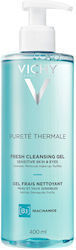 Facial Cleansers
-
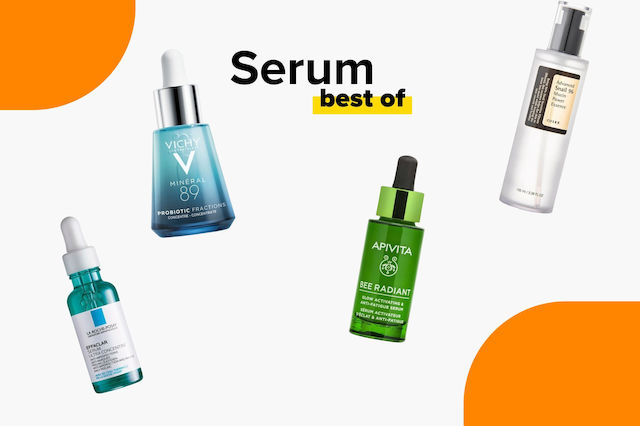
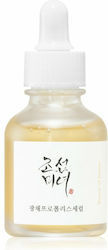 Serum
Serum
-
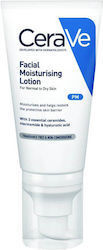 Face Moisturisers
-
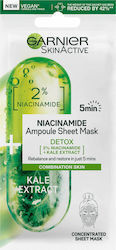 Face Masks
-
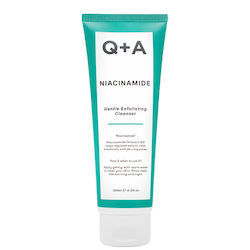 Face Scrubs & Exfoliators
What are the benefits of niacinamide?
Niacinamide is an ingredient with multiple benefits. It helps in the production of keratin, a protein that contributes to maintaining healthy skin, while tending to make the skin more resilient, soft, and radiant.
It is an ally in the effort to combat acne and helps repair and restore the skin’s healthy appearance, especially when combined with other ingredients, such as retinol.

More about niacinamide is that...
- restores the protective epidermal barrier, increasing the synthesis of ceramides and retaining the necessary moisture for the skin.
- helps with anti-aging, smoothing fine lines and reducing wrinkles. This makes it suitable for use on both youthful and more mature skin, as it "encourages" the synthesis of collagen, a component that diminishes in our skin over time.
- reduces discoloration & black spots, limiting the production of melanin, which is responsible for their appearance. Thus, the skin remains bright and free of marks.
- minimizes redness & spots, thanks to its anti-inflammatory action, which relieves such symptoms that may be caused by inflammatory conditions, such as acne.
- regulates oiliness, minimizing pores. This is what makes it ideal for all skin types, as moisture helps regulate dryness in corresponding skin types, but also regulates sebum secretion in oilier types, thus balancing oil levels.
- protects from sun radiation, always in combination with a good sunscreen.
- protects from oxidative stress, structuring cells necessary for the protection of the skin from environmental factors, such as sunlight, pollution, and toxins.
- is an ally against acne and more specifically severe forms of acne, for which treatments with harsh products are often followed, causing many of the above - such as the removal of the epidermal barrier, redness marks, dryness, etc. This is where niacinamide comes in and acts complementarily to restore these symptoms. However, it is not a treatment for acne on its own.
How does it work?
Niacinamide is a water-soluble vitamin that works in conjunction with the natural substances in the skin, acting complementarily, which is why it stands out from other ingredients. Thanks to its versatility and adaptability, it can help different skin types and focus on their unique needs.
How to Use Niacinamide
If you have not used niacinamide products before or have very sensitive skin - in this case, consult your dermatologist - it is good to start using it gradually and in a lower concentration at first. After about 2 weeks and for more visible results, you can incorporate it into your daily routine even twice a day, morning and night. Since we can encounter it at different stages of the skincare routine, let's see how you can use it depending on which product it is contained in.
The number one thing you should never skip is proper cleansing, so that you can then apply the rest of the products and achieve the best possible results. You may find products at this stage with a niacinamide content of less than 5%.

After you have thoroughly cleansed your face, you can then apply a toning lotion with niacinamide for hydration and replenishment.

Exfoliation is a step that needs to be included in your weekly or even monthly routine, depending on your skin type. For this reason, it requires moderation! When the time comes, you can use an exfoliant with niacinamide, with a light and gentle composition, to remove dead cells without irritating the skin.

The most common stage where we encounter niacinamide is in treatments, masks, etc. You can apply a booster or serum directly to your skin or mix it with your favorite moisturizer for more benefits. As we said, niacinamide is an ingredient that allows you to experiment and find what works best for your skin. Also, try it in a treatment form with a higher concentration (up to 20%) in cases with more persistent symptoms, such as clogged pores and orange peel texture.

Finally, use your moisturizer or a niacinamide eye cream, which can help improve the appearance of under-eye circles, soften the appearance of crow’s feet, and maintain the area’s moisture without losing its firmness.

Combination with Other Products (?)
Is there any ingredient that you cannot combine with niacinamide? Things are simple! It can be combined with everything. Thanks to its versatility, it is compatible with every other ingredient, offering different benefits in each combination. Let's take a look at some of the main ones.
- Niacinamide + Retinol - Minimization of enlarged pores and restoration of skin uniformity
- Niacinamide + Vitamin C - Restoration of skin uniformity and texture
- Niacinamide + AHA/BHA (acids) - Smooth and radiant skin
- Niacinamide + Hyaluronic Acid - Firm skin and hydration

Does it have side effects?
The topical use of niacinamide is considered safe and without side effects. However, individuals prone to allergies are more likely to experience some allergic symptoms. Therefore, it is good to do a small test before incorporating it into your routine. Apply a small amount of the niacinamide product to your forearm and let it act for about 24 hours. If you feel any discomfort, itching, redness, etc., rinse the area and consult a specialist. In any other case, you can continue its use. Naturally, it is always good to get your dermatologist's opinion.

When Will You See Results?
Generally, it will take 2 to 4 weeks of daily use, morning and night, to see results. It always depends on the extent of your needs and your skin type in combination with the product you have chosen. As you continue to use products with niacinamide in your routine, you will see more and more results. However, don't expect to have zero pores, for example... no product can guarantee that, and your skin needs them to some extent anyway, for many vital functions. What you can realistically expect is pore minimization, even skin tone, and rebuilding of the protective barrier, as well as a reduction in fine lines and wrinkles. In short, healthy and radiant skin.

Are you a skincare lover?
- Discover Retinol: What it is and how it benefits the skin
- Double cleansing: What it is and how to incorporate it into your skincare routine.



Be the first to leave a comment!