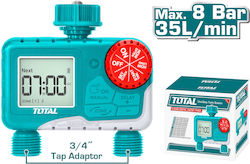
На батерия: Те са идеални в случаи, когато няма достъп до електрически контакт. Те също така разполагат с 9V трансформатор и могат да бъдат свързани с електромагнитни клапани, които имат напрежение от 9V.
Електрическа: За достъп до електрически контакт ще бъде необходимо. Те разполагат с 24v трансформатор и могат да бъдат свързани с соленоидни клапани, които имат напрежение от 24v.
Без ток/батерия: Работи механично, обикновено с водно налягане. Автоматично регулира потока и продължителността на поливането без електрическа енергия. Издръжлив е, лесен за инсталиране и идеален за градини, като спестява вода и време по лесен начин.
Wi-Fi: Имате възможност да контролирате програматора за напояване дистанционно чрез мобилно устройство, тъй като той може да има вграден Wi-Fi или да работи с разширение (донгъл).
Zigbee: Свързва се с интелигентни устройства чрез протокола Zigbee и има обхват около 15 метра.
Bluetooth: Позволява безжична комуникация между устройството и потребителя чрез смартфон или таблет. Вместо ръчно задаване на графика от панела на устройството, може да се използва приложение
Колкото повече изходи има програматорът, толкова много независими линии за напояване има. С повече от 1 изходи имаме възможността да напояваме с различни програми в зависимост от нуждите на растенията.
Максималният брой електрически вентилатори, които могат да бъдат използвани. Например, ако искам да свържа 4 електрически вентилатора към програматора, ще се изисква програматор с поне 4 спирали.
Разтегателен: Имате възможността да използвате разширителна платка, за да увеличите броя на соленоидите във вашата система.
С електромагнитен клапан: Соленоидният клапан се отваря или затваря според настройките на програматора, осигурявайки ефективно напояване. Това позволява на системата да работи без необходимост от ръчна намеса.
Съвместим със сензор: Връзката с дъждовен сензор позволява на програматора за напояване автоматично да спре поливането, когато бъде засечен дъжд.
Водоустойчиви: Устойчив на дъжд, което го прави способен да работи в открити среди, без да бъде повлиян от метеорологичните условия.
Седмично програмиране: Позволява настройването на различни графици за поливане за всеки ден от седмицата, осигурявайки гъвкавост при регулирането на честотата и продължителността на напояването според нуждите на градината.
Циклично програмиране: Поливането се активира на повтарящи се времеви интервали, независимо от времето на деня. Потребителят задава интервал (напр. на всеки 3/6/9 часа)
С ръчно поливане: Ръчното поливане позволява незабавно активиране на поливането, без да се засяга планираната програма. То е полезно за тестване, допълнително поливане по време на сухи периоди или когато е необходимо незабавно овлажняване на растенията.
Със закъснение във времето: Позволява отлагане на поливането за определен период от време, без да се променя основният график. Използва се за временно прекъсване поради дъжд или поддръжка.
9V: Използват се в програматори за напояване, които изискват постоянно напрежение за своята работа. Подходящи са за устройства с електромагнитни клапани, осигурявайки необходимата мощност за тяхното активиране.
AA: AA батериите са съвместими с много програматори за напояване, които работят с електронни контролни системи.
AAA: AAA батериите се използват в програматори за напояване, които изискват по-ниска консумация на енергия. Те са малки по размер и лесни за подмяна.
Alexa: Платформата за автоматизация на Amazon, базирана на гласовия асистент Alexa. Предлага възможност за гласово управление и създаване на „умения“ за свързване и автоматична координация на множество смарт устройства.
Google Home: Платформа на Google за управление и контрол на смарт устройства. Позволява управление чрез Google Assistant с гласови команди на български език и интегриране на устройството в автоматизирани сценарии (Routines).
Apple HomeKit: Екосистемата на Apple, която позволява сигурно управление на устройството от iPhone, iPad или Apple Watch. Поддържа гласови команди чрез Siri и създаване на автоматизации през приложението „Дом“ (Home app).
IFTTT: Система за автоматизация, която свързва устройството с приложения и други смарт джаджи. Позволява създаването на интелигентни сценарии (Applets) за автоматична работа според местоположение, време или други дигитални известия.