
5 + 1 Books About the Mother-Daughter Relationship
The mother, the daughter, and the words that (were not) spoken.
My mom had something I envy a lot: she could read on a bus and KTEL without getting dizzy and could finish a book in one sitting. Zero attention span. She read everything, from Greek and English novels to poetry and biographies, and in every possible form: print, e-book, audiobook. For her, reading was not just a habit, it was part of her identity. And so, almost effortlessly, she passed on to me the reading bug. It also helps that from a very young age she read me wonderful books before I went to sleep.
On the occasion of Mother's Day, I suggest 5 – difficult – books that deal with the mother-daughter relationship with realism, rawness, tenderness, or even anger. Stories that illuminate this unique, often turbulent, relationship from different perspectives.
1. A Woman – Annie Ernaux
A Woman by Annie Ernaux is a dense, introspective, and heartbreakingly honest book that moves on the fine line between memory and literature. Without sentimentality or embellishments, Ernaux portrays her mother as a working-class woman, ambitious, tough, contradictory. A presence that marked her life. The fragmented narrative, the almost "timeless" rhythm, and the distance the author attempts to maintain function not as detachment but as a deeper attempt at understanding and redemption. It is a narrative that, while starting from the personal, touches on something universal: the universal, often difficult, relationship every child has with their mother.

Annie Ernaux tries to discover the different faces of her mother, who died weakened by the illness that destroyed her memory and deprived her of her physical and mental integrity. She attempts to reconstruct the life of this woman who was her mother, a woman active and open to the world, who worked as a laborer before opening her own shop, who was anxious to maintain her place in society, who was an avid reader and believed that "to rise, you must first learn." However, she is also faced with the contradictory feelings that a daughter often feels for her mother: love and hate, guilt, tenderness, annoyance, but also this compassionate and silent attachment to this elderly woman who is no longer alive. Ernaux's writing, precise and clear, brings back in a sweeping way this mother who was for her daughter the embodiment of Time and the social condition of origin: "I lost the last bond I had with a world to which I no longer belong."
WRITTEN ABOUT THE BOOK Incredibly original. A Woman is the story of every woman. Its strength lies not in the dramatic event that forms its core, but in the moments that could go unnoticed if the author's need did not drive her to retrieve from her memory every image of the beloved person who is now lost. New York Times Book Review Nothing less than a minimalist revelation, a writing so sparse and sharp that it reaches the heart with surgical precision. Los Angeles Reader Somewhere along the way and without losing for a moment the significance of specific details, A Woman transcends the individual story. Ernaux finds the truth of her mother's life, which proves to be not just a piece but the whole story. St. Petersburg Times An act of great love and great pain. Bloomsbury Review
2. Let Me Go, Mother – Helga Schneider
Let Me Go, Mother is a raw and harrowing soul-baring that strips the mother-daughter relationship of any romantic idealization. With heartbreaking honesty and almost surgical precision, Schneider confronts the trauma of abandonment and the moral horror of having an unrepentant Nazi collaborator as a mother. The narrative is sparse, cold, almost detached. Yet it is charged with underlying pain and unspoken rage. This is a book that offers no solace but demands to be looked at directly: as testimony, as confession, and as a desperate act of severing from the dark thread of ancestry.
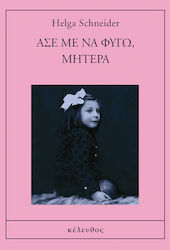
The narrative of Helga Schneider is the dramatic story of a daughter who never felt maternal love. She was "orphaned" at the age of four when her mother abandoned her husband and children to serve as a guard in the Nazi extermination camps.
Fifty years later, Helga lets the cry of despair be heard. On a rainy October dawn in 1998, when she visits her in a senior citizens' home, she hears from her own testimony of Nazi atrocities, in exchange for calling her mutti, mother.
"Let me go, mother" will be the phrase she says, turning her back, pleading for redemption...
3. Elena Knows – Claudia Piñeiro
Elena Knows is a multidimensional and heartbreakingly timely novel that dismantles certainties surrounding the maternal figure and highlights the unseen burden of daily care and female loneliness. Against the backdrop of a seemingly detective mystery, Piñeiro weaves the story of a mother with Parkinson's who, despite her physical limitations, insists on seeking the truth about her daughter. The narrative moves between the past and the present, illuminating the tensions of a relationship based on demands, silences, and misunderstandings. It is a deeply political work, without shouting. A cry against the indifference and passive normality that stifles the female experience.

Everyone believes that Rita committed suicide. Everyone, except for Elena, her mother. Because Elena knows. Because Elena, like every mother, is full of certainties that lead to uncertainties. A difficult journey to the capital, an old debt, and a revealing conversation compose this heartbreaking novel that unveils the hidden authoritarianism of every hypocritical society. Female subjectivity, the female body, and its oppressive bonds gain corrosive power through the pages of the novel Elena Knows, leading a mother and daughter to a coexistence that is harshly marginal and tragically human. In addition to Greek, Elena Knows has been translated into English, French, German, Polish, Dutch, Hebrew, and Turkish, and in Germany, it was honored with the Liberaturpreis 2010.
4. Burnt Sugar – Avni Doshi
Burnt Sugar is a stripped-down and raw novel about the failure of maternal love, where the need for affection coexists with resentment. Doshi delves into the awkward, suffocating relationship between a mother who was unpredictable, almost destructive, and a daughter growing up between the need for love and the despair of betrayal. Set against the backdrop of India and with a deeply internal narrative, the author writes avoiding melodrama. Instead of reconciliation, she offers us a chronicle of thwarted expectations, where memory, fragile and distorted, becomes a battlefield.

A different perspective on the most fundamental relationship of our lives. Tara remembers the past in a specific way; Antara remembers it completely differently. Each woman has wounds inflicted by the other. In her youth, Tara was rebellious. She left a loveless marriage to go to an ashram, lived briefly as a beggar, and spent a few years chasing a homeless "artist"—all with her daughter in tow. Now she forgets things, confuses her maid's wages, leaves the gas on all night, and Antara is faced with the obligation to care for a woman who never cared for her. A book about memory and myth, about how the stories you tell yourself become more real than your face in the mirror. An exploration of jealousy, obsession, betrayal, a love story—not between lovers, but between mother and daughter. Filled with caustic wit, Burnt Sugar asks how much we really know about the people closest to us and, by extension, about ourselves. Shortlisted for the Man Booker 2020, Shortlisted for the Women’s Prize for Fiction 2021, Sushila Devi Award 2021, Translated into 25 countries.
About the book: "Beautifully written, with emotional tensions, sometimes painful." –Booker Prize Jury. "A restless, robust debut that surprises the reader with its venom and disarms with its humor from the very first sentence." –Guardian. "A work of exceptional insight, courage, and technique." –Washington Post. "Avni Doshi is not just a talented writer, she is an artist. Her voice is so unadorned and raw, so painfully stubborn and original, that you want to keep listening to it." –New York Times Book Review.
Avni Doshi was born in 1982 in New Jersey and is now based in Dubai. Burnt Sugar is her first novel and is already being translated into 25 countries. It was a favorite on the Man Booker Prize shortlist in 2020, shortlisted for the Women’s Prize for Fiction in 2021, and won the Sushila Devi Award in 2021.
5. Mother of Zero Children – Lyo Kalovyrnas
And because all femininities have a – biological – mother, but not all want to become mothers, we also suggest a book that opens the dialogue about the choice of non-motherhood. Mother of Zero Children is a bold and radical essay that attempts to unravel, thread by thread, the stereotypes surrounding motherhood as a biological destiny or social obligation. With calm yet sharp writing and utilizing both personal testimonies and scientific data, Lyo Kalovyrnas illuminates a deeply unseen aspect of the female experience: the right not to want to become a mother.

Description: Is motherhood a human instinct? Is there a maternal filter? What is really true about the biological clock? Do women who didn't have children regret it? Are there women who had children and regretted it? To what extent is motherhood freely chosen or socially imposed? Is it selfish that I (don't) want a child? Is it normal that I don't want to become a mother? How can I be sure if I want a child or not? When motherhood is considered the ultimate value and the only "normal" path for all women, those who consider not becoming mothers face constant pressure to conform to the prevailing social norm and fulfill their "nature." The pressures start so early that many women struggle to detect their "real" desires. Having children is considered a non-decision, a law of nature, resulting in blurred boundaries between wanting to become a mother and consenting to become a mother. How we use our womb divides women into successful and unsuccessful. This book, based on research and the psychotherapy groups organized by Lyo Kalovyrnas since 2012, gives voice to women, with or without children, who are not only unheard but also silenced and underestimated as problematic or non-existent.
Contents: Introduction: why I wrote this book. 1. Silencing women's desire. 2. There is no maternal instinct. 3. And the hormones? the maternal filter? 4. Does my body ask me to have a child? Or maybe the television? 5. Need for a baby? no, need for care. 6. Biological clock: a sneaky myth is born. 7. Fertility as a threat. 8. Non-motherhood as imposition. 9. To become a mother or not? The choice, the freedom, and its burden. 10. What is my real desire? 11. How to decide what I really want. 12. I won't have children: one big choice or many small ones? 13. Why would I want a child? 14. Will I regret it? 15. Women who regretted becoming mothers. 16. How to deal with pressures. 17. Am I selfish or irresponsible because I don't want children? 18. Living without children. Bibliography.
P.S.
Finally, because Mother's Day finds some of us mourning her loss, I have to recommend the amazing book by Alessandra Olanow, Hello Grief, which through few words and very powerful illustrations, wonderfully and very realistically captures the journey of grief and the loss of a mother. Because no matter how old you are, you always remain a child inside...
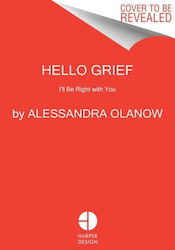
The author of the bestseller "I Used to Have a Plan" returns with more encouragement for the soul, offering advice, inspiration, and comfort to all who have lost something or someone significant.
After losing her mother to cancer, Alessandra Olanow felt intense grief and uncertainty, immersed in the uncontrollable wave of emotions that everyone experiences after a loss in their own unique way.
In this wise and intimate book, the artist and author draws lessons from her personal loss as well as from her training as an end-of-life doula, to explore the complex and painful process of grieving. Olanow documents her journey through pain and how she learned to endure a grief that will never go away.
With concise yet poignant writing and more than 75 color illustrations, she shares her struggle with feelings of loss and nostalgia, showing that over time, grief evolves and we relearn the world that has changed from this loss.
"Hello Grief" can be read from start to finish or opened to any page: each spread offers a warm combination of advice, comfort, empathy, and humor that is immediate, useful, reassuring, and profound in its truth.
Olanow has distilled the experience of grief and the healing process into a soothing book that will offer comfort to anyone mourning.
Pages: 128, Dimensions: 14x14cm
Relevant Articles
5 Books You Must Read at Least Once in Your Life
Great Greek Authors

The Greek Mythology Retellings You Shouldn't Miss
Be the first to leave a comment!